The Psychology of Post-Purchase Buyer Anxiety in Social Commerce
In the Philippine e-commerce ecosystem—particularly across direct-to-consumer social commerce channels like Facebook Marketplace, Instagram boutiques, Viber communities, and TikTok Shop off-platform transactions—the window immediately following order confirmation is fraught with friction. Unlike institutional marketplace platforms with built-in escrow safeguards, independent social sales rely entirely on interpersonal trust. Once a customer transfers funds via GCash, Maya, or bank transfer, or commits to an impending Cash on Delivery (COD) balance, their primary psychological concern shifts toward fulfillment legitimacy.
Buyer anxiety peaks between the moment payment is completed and the arrival of an official carrier waybill. During this critical window, customers frequently question whether their order was acknowledged, whether the merchant has dispatched the package, or whether they have fallen victim to an online retail scam. Failure to provide proactive, transparent shipping confirmation within hours of counter drop-off triggers customer service friction: repetitive status inquiries, impatient follow-ups, and in worse cases, payment chargeback threats or unfulfilled COD refusals.
Professional merchants view shipping communication not merely as an operational chore, but as an essential customer retention touchpoint. A structured, transparent dispatch message reassures the buyer that their order is in physical transit, sets clear expectations regarding regional delivery timetables, and establishes an authoritative audit trail that protects the seller in the event of courier delays or delivery disputes.
Empirical data across Philippine social commerce shows that sellers who deliver clear tracking instructions within 2 hours of counter intake experience a 40% reduction in "Where Is My Order" (WISMO) support queries and an 18% lower refusal rate on Cash on Delivery orders compared to merchants who wait until evening to send tracking details.
Anatomy of the 12-Digit LBC Tracking Number and Waybill Structure
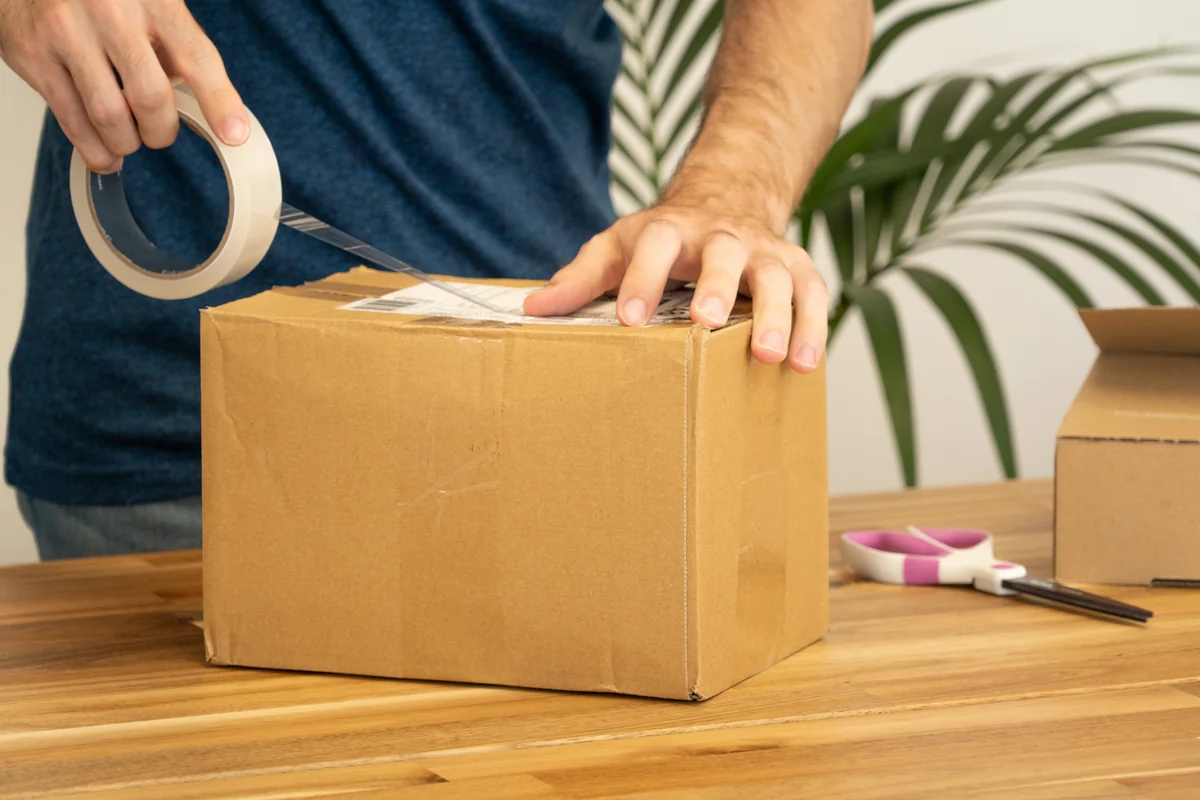
Before drafting customer notifications, sellers must understand the technical data structure of LBC documentation. When you tender a package at an LBC Express counter, the cashier issues a point-of-sale thermal slip while adhering a barcoded routing waybill sticker directly to the box or poly-mailer pouch.
Modern LBC domestic courier shipments utilize a standard 12-digit numeric tracking code (for example, 1234-5678-9012). This twelve-digit sequence is the primary index key within LBC's national enterprise database. It links the package to the sender's declared metadata, the consignee's verified address, the package weight and dimensions tier, and the destination delivery exchange.
A frequent error made by novice online merchants is confusing the promotional QR code printed on thermal paper receipts with the shipment tracking number. Modern retail receipts include a square 2D QR code that directs smartphones to download the mobile application or view promotional material. Attempting to input strings associated with that QR code into tracking search bars returns an "Invalid Tracking Number" error. The valid tracking number is always the twelve plain digits printed directly underneath the linear 1D barcode on the customer receipt slip or waybill sticker.
Ready-to-Use Customer Notification Templates for Every Sales Channel
Effective post-dispatch communication requires presenting shipping information in a structured, easily readable format. A single wall of unbroken text or a blurry photograph sent without context forces the customer to manually squint at thermal digits, frequently leading to transcription mistakes.
Use the following battle-tested notification templates tailored to specific fulfillment scenarios:
Template 1: Standard Paid Orders (Door-to-Door Delivery)
Use this template for pre-paid transactions (GCash, Maya, Bank Transfer) heading directly to the customer's home or workplace address:
- Subject / Opener: Great news! Your order #[Order Number] has been shipped via LBC Express.
- Consignee Name: [Customer Full Name]
- Tracking / Waybill Number:
[12-Digit Tracking Number](Tap and hold to copy) - Live Tracking Portal: https://www.lbctracks.com
- Estimated Transit Window: [1-2 business days for NCR / 2-4 days for Luzon / 3-5 days for Visayas & Mindanao]
- Important Note: The counter intake scan typically registers on the online tracking database within 2 to 6 hours after drop-off. Please ensure someone is available at your delivery address with a valid ID to receive the parcel.
Template 2: Cash on Delivery (COD) Doorstep Dispatch
COD orders carry the highest cancellation and refusal risks. This template emphasizes payment readiness and authorized receiving delegates:
- Subject / Opener: Out for Transit: Your Cash on Delivery order #[Order Number] is on the way!
- LBC Tracking Number:
[12-Digit Tracking Number] - Exact Amount to Prepare: ₱[Total COD Amount in Philippine Pesos] (Exact change is highly appreciated by riders)
- Direct Tracking Link: https://www.lbctracks.com
- Delivery Instructions: The courier rider will deliver directly to your address between 8:00 AM and 6:00 PM, Monday through Saturday. If you are away, please leave the exact payment and an authorization note with a household member or building concierge.
Template 3: Cash on Pick-up (COP) Branch Collection
COP orders require the buyer to visit an LBC retail branch. Clear instructions prevent parcels from being returned due to expired pickup windows:
- Subject / Opener: Branch Dispatch: Your order #[Order Number] is routed for LBC Branch Pick-Up (COP).
- Designated Pickup Branch: LBC Express - [Branch Name and Mall/Street Location]
- Tracking Number:
[12-Digit Tracking Number] - Amount to Pay upon Claiming: ₱[Total Amount Due]
- Claiming Requirements: Present this 12-digit tracking number and one (1) valid Philippine government-issued photo ID matching the consignee name.
- Holding Policy: LBC holds COP packages at the destination branch for five (5) calendar days once received. Please claim promptly to avoid automatic Return to Sender (RTS).
Best Practices for Sharing Waybill Photos and Data Privacy Act Compliance
Many online sellers photograph the counter paper slip and send it directly to the customer as proof of shipment. While sharing proof of dispatch is good practice, doing so carelessly carries serious legal and security consequences under Philippine law.
Under the Data Privacy Act of 2012 (Republic Act No. 10173), personally identifiable information (PII)—including a customer's complete legal name, full residential address, personal mobile phone number, and transaction financial totals—is protected legal data. Publishing unedited photos of courier waybills or thermal receipts on social media "proof of shipping" albums, Facebook feeds, or public Instagram stories violates the National Privacy Commission's guidelines and exposes your business to administrative penalties.
Furthermore, exposing unredacted thermal receipts enables fraudulent interception. Rogue individuals can contact delivery riders or branch counters armed with the recipient's exact name, phone number, and tracking code, attempting unauthorized redirection or parcel claims.
If you post proof-of-shipping photos to public social media pages, you MUST digitally censor or blur: (1) the customer's mobile number, (2) the street name, house number, and building details, (3) declared item values, and (4) the middle digits of the tracking number. Only send unredacted receipts in private 1-on-1 direct messages to the verified buyer.
The 2-to-6-Hour Database Indexing Gap: Proactive Expectation Setting
One of the most frequent customer complaints encountered by e-commerce sellers is the immediate panic when a buyer pastes their newly received tracking number into an online tracking portal, only to see the error status: "Tracking Number Not Found" or "Unindexed Waybill."
This occurrence is not a shipping error; it is an inherent operational characteristic of courier batch processing. When a counter staff member accepts a parcel at a retail branch, the physical intake creates a local terminal log. However, that entry may not sync instantly across national cloud servers until the branch completes its afternoon batch consolidation, or until the physical parcel is scanned at the primary sorting exchange hub during evening intake.
To prevent customers from accusing you of issuing "fake tracking numbers," always include a brief operational disclaimer in your initial message. Inform the buyer in advance: "Please allow 2 to 6 hours for the origin branch sorting scan to sync with the national online tracking database." Educating the customer before they encounter the blank status page completely eliminates unwarranted suspicion.
Operational Playbook: Managing Stalled Tracking, Failed Attempts, and RTS
Even with flawless communication, logistics anomalies occur. Philippine geography, weather disturbances, and recipient unavailability can complicate delivery routes. A professional merchant must execute structured contingency steps when delivery challenges arise:
Audit In-Transit Milestones at Day 3
Monitor your master shipping ledger. If an intra-Luzon or Metro Manila shipment has not reached "Out for Delivery" within 72 hours, review the tracking logs for weather holds or hub transit staging.
Intervene on First "Delivery Attempt Failed" Scans
When the tracking portal indicates "Consignee Unreachable" or "Incomplete Address," immediately message the customer. Confirm their active contact number, provide landmark references, and notify LBC support before a second attempt.
Coordinate Branch Holding Before Return-to-Sender (RTS)
LBC standard policy allows two delivery attempts before routing the package to the nearest delivery hub or originating branch. Request a "Hold at Branch" conversion so the buyer can pick up the parcel in person rather than letting it ship back to your origin.
Maintain Clear Return & Cancellation Policies
Document who bears freight costs for unjustified COD refusals. Under DTI consumer regulations, buyers are accountable for agreed delivery commitments unless the delivered item is defective or non-compliant.
| Tracking Status Alert | Buyer Perception / Fear | Seller Action & Recommended Reply |
|---|---|---|
| Tracking Number Not Found | Seller gave a fake tracking number or has not shipped. | Explain the 2-6 hour server sync cycle. Ask buyer to re-check after 7:00 PM. |
| Received at Exchange Hub (2+ Days) | Package is lost or stuck in a warehouse. | Clarify regional line-haul transit (inter-island RO-RO ferry or regional sorting routes). |
| Delivery Attempt Failed - House Closed | Courier never knocked or called; buyer was home. | Collect an alternate mobile number and landmark notes; contact LBC customer service for next-day priority re-delivery. |
| Forwarded to Destination Branch | Why is it at a branch instead of my house? | Inform buyer this is the final local distribution station assigning riders for last-mile delivery. |
Automating Fulfillment Workflows for Scaling Online Businesses
As your monthly order volume expands from a handful of packages to dozens or hundreds per week, manual messaging becomes an operational bottleneck. Manually typing twelve digits into individual chat windows invites clerical errors and consumes hours of productive business time.
Consider adopting scalable fulfillment practices to streamline order dispatches:
First, maintain a standardized Master Dispatch Ledger using Google Sheets or Airtable. Record the buyer name, contact number, platform order ID, 12-digit LBC waybill, drop-off date, and payment status. Incorporate direct formula hyperlinks that automatically generate clickable tracking links (e.g., https://www.lbctracks.com) so your team can audit parcel statuses with a single click.
Second, utilize mobile keyboard shortcuts or text expansion tools (such as native iOS Text Replacement, Android Personal Dictionary, or desktop apps like TextExpander). Assigning a trigger like /lbcdispatch to automatically expand into your complete notification template allows your support team to personalize and transmit tracking details in less than fifteen seconds per order.
Finally, encourage customers to bookmark independent tracking utilities like LBC Tracks. Independent tracking tools provide comprehensive status explanations, helping buyers understand logistics terminology without needing constant assistance from your customer service team.