Executive Summary: Can a Representative Collect Your Held Package?
When an LBC Express package arrives at a local retail branch—whether shipped as a branch-to-branch Cash on Pick-Up (COP) order or held following an unsuccessful residential delivery attempt—the named recipient (consignee) is expected to collect it in person. However, professional work commitments, sudden business travel, academic schedules, medical emergencies, or living overseas frequently prevent consignees from visiting the branch personally.
The short answer is yes, an authorized representative can legally collect your package from an LBC Express branch on your behalf. Under the Civil Code of the Philippines (Republic Act No. 386, Title X on Agency), a person may legally designate an agent or representative to perform commercial and transactional acts in their name. Philippine couriers operate in strict accordance with these principles, allowing proxies to accept parcel handovers upon presentation of verified written authority.
However, courier branch tellers do not release parcels informally. As commercial common carriers handling valuable merchandise and confidential communications, couriers operate under stringent cargo custody rules and the Data Privacy Act of 2012 (Republic Act No. 10173). Tellers are legally accountable for preventing package diversion, identity theft, and fraudulent claims. Releasing a package to an unauthorized party can result in severe legal liability, internal disciplinary sanctions, and financial restitution obligations for branch staff.
Below is an overview of shipment eligibility for representative branch collection across common courier parcel categories:
| Shipment Category | Representative Claim Permitted? | Required Documentation Level | Operational Rules & Restrictions |
|---|---|---|---|
| Standard Prepaid Retail Parcel | YES (Permitted) | Standard: Signed letter + Consignee ID copy + Proxy original ID | Freight pre-settled; representative signs branch release ledger and presents tracking code |
| Cash on Pick-Up (COP) Order | YES (Permitted) | Standard: Signed letter + Consignee ID copy + Proxy original ID + Cash | Representative must pay full declared COP merchandise amount plus any freight balance |
| Bank Cards & Financial Tokens | NO (Strictly Barred) | Consignee-Only: Mandatory personal appearance of cardholder | Financial institutions contractually mandate direct handover strictly to named cardholder |
| Biometric Passports & Visas | RESTRICTED / SPECIAL | Special consular authorization / immediate family proof only | Consular VCargo documents require specific consular release forms and civil registry proof |
| Legal & Judicial Notices | NO (Strictly Barred) | Consignee-Only: Personal service receipt required by court rules | Process server requirements require verified personal signature of the respondent |
| Overseas Balikbayan Cargo | YES (Permitted) | Standard: OFW signed authorization + Overseas passport copy + Proxy ID | Representative must verify packing declaration list and settle any local delivery fees |
The Mandatory Document Trinity: What Your Representative Must Bring
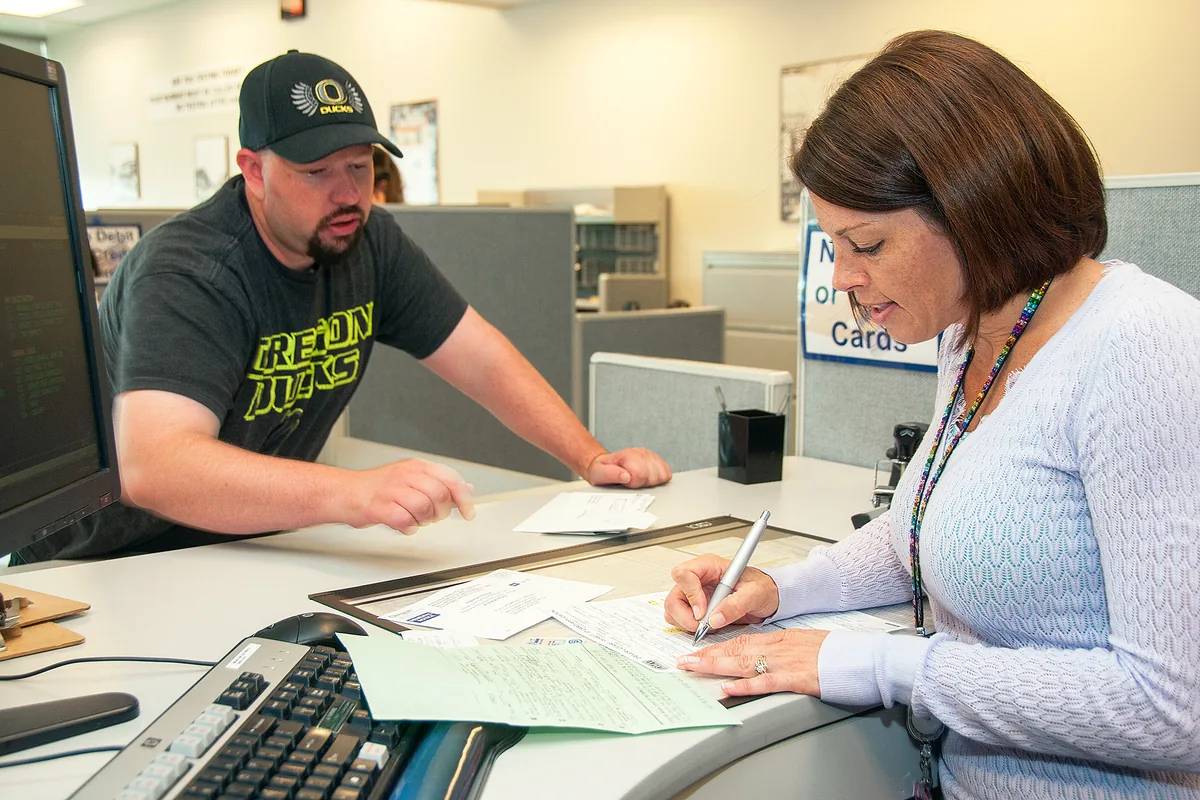
To satisfy courier internal control audits, branch tellers must physically attach paper verification records to their daily counter settlement journals. If an audit inspector reviews a released parcel transaction, the branch file must contain tangible documentary proof demonstrating why the package was handed to someone other than the named consignee.
Your representative must arrive at the branch counter with what logistics personnel refer to as The Mandatory Document Trinity:
Physical Signed Authorization Letter (Original Paper Copy)
A formal written or printed letter signed by the consignee, explicitly designating the representative by full legal name and referencing the exact 12-digit LBC waybill tracking number. The letter must explicitly grant authority to claim, inspect, pay for, and receive the specific shipment.
Photocopy of Consignee's Valid Government Photo ID (With 3 Specimen Signatures)
A clear, legible photocopy showing both the front and back of the consignee's unexpired primary government-issued photo ID. Directly beside or beneath the ID photocopy, the consignee must handwrite three fresh specimen signatures using ink to enable the teller to verify signature consistency.
Original Valid Government Photo ID of the Authorized Representative
The representative must present their own original, physical primary government-issued photo ID. A photocopy or digital photo on a smartphone is completely unacceptable for the representative. The teller must inspect the physical security features of the ID and match the bearer's face to the document photo.
12-Digit Waybill Tracking Number and Official SMS Advisory
The representative must provide the official 12-digit waybill tracking number. If LBC sent an automated SMS claim notice or pickup confirmation code to the consignee's mobile number, having a forward of that text message expedites counter retrieval.
Exact Settlement Funds (For Cash on Pick-Up Shipments)
If the consignment is Cash on Pick-Up (COP) or carries unpaid freight charges, the representative must tender the full cash balance. Tellers cannot release parcels on partial payment or verbal promises of future settlement.
One of the most common reasons representatives are turned away at branch counters is presenting digital snapshots of authorization letters or ID cards on their smartphones. Courier branch operating procedures require physical paper documentation to physically staple to the transaction audit slip. While some branch supervisors may make rare emergency exceptions for minor prepaid parcels if the consignee is verified via a real-time video call, you should never rely on digital-only displays. Always send your representative with printed paper documents.
Acceptable Philippine Government Identification for Claimants and Proxies
In compliance with Bangko Sentral ng Pilipinas (BSP) circulars, the Anti-Money Laundering Council (AMLC) freight guidelines, and Philippine courier network standards, branch staff can only accept verifiable government-issued credentials. Tellers evaluate presented cards for tamper resistance, official seals, clear facial photographs, and unexpired validity.
Philippine identification documents are categorized into primary and secondary credentials. Both the consignee (on their submitted photocopy) and the designated representative (presenting their original physical card) should utilize primary identification whenever possible.
Below is the complete classification matrix of acceptable Philippine government identification cards for branch counter claims:
| ID Document Type | Issuing Government Authority | Credential Classification | Verification Standards & Notes |
|---|---|---|---|
| Philippine Passport | Department of Foreign Affairs (DFA) | PRIMARY (Gold Standard) | Must be unexpired; contains biometric chip data and standardized signature field |
| Driver's License | Land Transportation Office (LTO) | PRIMARY | Must be physical PVC card or validated LTO Portal digital license with QR security |
| Unified Multi-Purpose ID (UMID) | SSS / GSIS / PhilHealth / Pag-IBIG | PRIMARY | Accepted across all commercial branches; biometric data verified on card face |
| PhilSys National ID / ePhilID | Philippine Statistics Authority (PSA) | PRIMARY (Mandatory Acceptance) | Under RA 11055, branches must accept both physical PVC card and printed digital ePhilID |
| Postal ID (Digitized / PVC Card) | Philippine Postal Corporation (PHLPost) | PRIMARY | Must be modernized PVC card with holographic security overlay and QR verification |
| PRC Professional License Card | Professional Regulation Commission (PRC) | PRIMARY | Valid professional license card containing photo, signature, and license expiry date |
| Senior Citizen ID / PWD Card | OSCA / Local Government Unit (LGU) | PRIMARY (With Photo & Sign) | Must display clear photo, signature, and official seal of the issuing municipal office |
| Voter's Certification | Commission on Elections (COMELEC) | SECONDARY (Supporting) | Must be official COMELEC Intramuros or district certification with dry seal and photo |
| Barangay Clearance / Certificate | Local Barangay Council | SECONDARY (Supporting Only) | Not accepted alone; must be supported by another government credential with photo |
| Student ID Card | Recognized School / University | CONDITIONAL (Minors Only) | Valid only for student consignees under 18; must be paired with PSA Birth Certificate |
Ready-to-Use Authorization Letter Template (General Consumer Format)

Important Legal Disclaimer: The sample letter above is provided solely as an independent informational and educational template complying with general Philippine Law on Agency standards. It is not an official or proprietary LBC Express corporate form. Branch managers retain discretionary authority to request additional verification if fraud or identity discrepancies are suspected.
To safeguard your personal identity against potential misuse, draw a horizontal or diagonal protective restriction line across the face of your attached ID photocopy with the written annotation: "FOR LBC PACKAGE CLAIM TRACKING #123456789012 ONLY — NOT VALID FOR FINANCIAL OR CREDIT TRANSACTIONS." This standard fraud-prevention measure prevents unauthorized third parties from reusing your ID photocopy for unrelated commercial purposes.
Date: [Day / Month / Year] To: The Branch Manager / Customer Service Officer LBC Express Inc. — [Exact Branch Name, e.g., SM Megamall Branch] [Branch City / Municipality, Philippines] SUBJECT: AUTHORIZATION TO CLAIM PACKAGE UNDER TRACKING NUMBER [Insert 12-Digit Waybill Number] Dear Sir / Madam: I, [Your Full Legal Name], of legal age, residing at [Your Complete Home Address], with contact number [Your Mobile Phone Number], am the designated consignee of the package shipped via LBC Express under Tracking Number [123456789012]. Due to [Brief Reason, e.g., work commitments / out-of-town travel / medical reasons], I am unable to personally visit your branch counter to collect my shipment. I hereby authorize my designated representative, [Representative Full Legal Name], residing at [Representative Complete Home Address], bearing [Representative ID Type, e.g., Driver's License] Number [ID Number], to act on my behalf. My representative is fully authorized to present identification, pay any applicable Cash on Pick-Up (COP) collection or freight balances, inspect the external package packaging, sign the counter release register, and receive the shipment on my behalf. Attached to this letter for your verification and record-keeping are: 1. A photocopy of my valid government photo ID ([Consignee ID Type, e.g., Philippine Passport]) with three (3) specimen signatures. 2. The original valid government photo ID of my designated representative for on-site physical inspection. Thank you for your assistance and professional service. Very truly yours, [Your Handwritten Signature over Printed Name] [Your Full Legal Name — Consignee] Contact Number: [09XX-XXX-XXXX]
Special Scenarios: OFWs, Minors, Corporate Consignees, and COP Parcels
While standard retail parcels follow the straightforward three-document protocol, several unique customer scenarios require specialized handling:
Scenario A: Overseas Filipino Workers (OFWs) Authorizing Local Relatives. Millions of Filipinos overseas purchase goods online for family members in the Philippines or send unaccompanied personal effects. If the package was addressed in the OFW's name, the OFW must draft the authorization letter, sign it by hand, and email or message a high-resolution PDF or scan to the local relative. The relative prints the letter and the OFW's passport/visa photocopy in the Philippines, adds their own original Philippine government ID, and presents the packet at the branch. Informing the branch in advance and providing the OFW's international WhatsApp or mobile number allows staff to perform quick remote verification if required.
Scenario B: Cash on Pick-Up (COP) Collections. For Cash on Pick-Up orders, the branch acts as an escrow collection agent for the merchant. Tellers cannot waive or discount collection amounts. Ensure your representative carries sufficient cash to settle the exact PHP total, including any local handling fees. Some modernized branches accept GCash QR or Maya QR payments at the counter, but carrying physical backup cash guarantees your representative will not be stalled if payment gateway terminals experience intermittent downtime.
Scenario C: Business and Corporate Consignees. If the waybill is addressed to a registered company, corporation, or commercial enterprise (e.g., 'ABC Trading Corp'), an individual personal authorization letter is insufficient. The representative must present a formal Authorization Letter or Secretary's Certificate on official corporate letterhead, signed by an authorized corporate officer, HR manager, or business owner, accompanied by the officer's ID photocopy and the representative's company ID plus government ID.
Scenario D: Minor Consignees (Under 18 Years Old). If an e-commerce parcel is addressed to a minor child or teenager who lacks a primary government ID, the biological parent or court-appointed legal guardian may claim the package. The parent must present their own original primary government photo ID along with the child's official PSA Birth Certificate proving parental relationship.
LBC Express branches hold unclaimed retail parcels and Cash on Pick-Up packages for a standard grace period—typically 5 to 10 calendar days from the date tracking indicates 'Ready for Pick-Up.' If a shipment remains unclaimed beyond this holding window, automated logistics protocols initiate Return to Sender (RTS) processing, sending the parcel back to the origin distribution hub. Sending an authorized representative promptly ensures your package is collected before storage grace periods expire. For complete holding duration timetables, review our guide on How Long LBC Holds Undelivered Packages.
Troubleshooting: What to Do If the Branch Refuses Your Representative
If a documentation dispute cannot be resolved immediately at the counter, politely ask to speak with the Branch Supervisor or Head Teller. Explain your situation calmly and request guidance on the specific supplementary proof required. In many instances, the supervisor can confirm legitimacy by placing a brief verification voice call to the consignee's registered mobile number while the representative remains at the counter desk.
For additional operational guidance on branch collection workflows, operating schedules, and pickup policies, consult our companion LBC Branch Pick-Up Guide and Guide to LBC Cash on Pick-Up (COP).
- Reason 1: Signature Inconsistency. The signature on the authorization letter does not visually match the signature displayed on the consignee's ID photocopy. Remedy: The consignee should write three fresh specimen signatures on a clean sheet of paper, take a sharp high-resolution photograph, and send it to the representative to print and attach.
- Reason 2: Representative Name Discrepancy. The name written in the authorization letter differs slightly from the name on the representative's physical ID (e.g., maiden name vs. married name, or missing middle initials). Remedy: The consignee must re-issue a corrected letter matching the exact legal name shown on the representative's physical ID.
- Reason 3: Presenting Expired or Digital ID Documents. The representative brought an expired driver's license or attempted to display their ID on a smartphone screen. Remedy: The representative must retrieve an unexpired physical primary government ID or visit a nearby print shop to print paper photocopies.
- Reason 4: Consignee-Only Security Restriction. The package is a bank card, legal notice, or restricted corporate shipment explicitly designated for personal consignee handover only. Remedy: In this scenario, branch staff have zero legal discretion to override the sender's security instruction. The consignee must wait until they can visit the branch in person, or contact the issuing bank/merchant to modify delivery instructions.
- Reason 5: Unpaid Balances or Shortage of Cash. The representative brought insufficient cash to cover the full Cash on Pick-Up collection balance or accumulated freight storage charges. Remedy: The representative must withdraw necessary funds from a nearby automated teller machine (ATM) or settle the remainder via supported digital QR payment channels.
LBCtracks is an independent informational guide and logistics reference website. We are not owned by, affiliated with, or operated by LBC Express Inc. Branch document requirements and parcel release policies are established and enforced exclusively by LBC Express corporate guidelines and Philippine common carrier regulations. To verify specific branch policies or confirm parcel status, please contact official LBC customer care or visit lbcexpress.com.