The Golden Rule of Branch Drop-Off: Why You Must Leave Your Carton Unsealed
Dropping off a package at an LBC Express branch counter is one of the most routine logistical tasks for Filipino online sellers, business owners, and individuals sending gifts or documents to loved ones across the country. Yet hundreds of senders experience daily frustration at branch counters because of one simple mistake: taping their boxes shut at home before visiting the branch.
When you arrive at an LBC counter with a heavily taped, sealed cardboard box, the teller will immediately hand you a pair of scissors or utility blade and politely ask you to cut open every single taped flap. This requirement is not arbitrary bureaucracy; it is anchored in strict national security and transportation mandates.
Under Civil Aviation Authority of the Philippines (CAAP) cargo safety regulations and common carrier laws, freight couriers are legally accountable for the cargo traveling aboard domestic commercial aircraft and passenger ferries. Couriers must visually inspect package contents at the point of origin intake to verify that shipments do not contain:
- Hazardous & Flammable Chemicals: Unregulated aerosols, lighter fluids, industrial solvents, or flammable liquids that pose severe combustion hazards in pressurized cargo holds.
- Loose Lithium-Ion Batteries: Raw battery cells, power banks exceeding capacity limits, or damaged rechargeable packs subject to aviation safety bans.
- Prohibited Contraband & Controlled Goods: Narcotics, undeclared prescription drugs, counterfeit currency, firearms, ammunition, or illegal wildlife products.
- Perishable or Decomposing Foodstuffs: Unpreserved fresh meats or seafood lacking commercial vacuum packaging and quarantine documentation.
Cushion your internal items thoroughly with bubble wrap, packing peanuts, or foam at home. Close the carton flaps loosely or fold them closed without applying adhesive tape. Once the teller inspects the interior contents at the counter, they will apply heavy-duty, reinforced LBC branded packaging tape over all box seams free of charge.
Pre-Visit Checklist: What to Prepare Before Leaving Home
A smooth counter drop-off should take no longer than five to ten minutes. Senders who experience agonizingly long counter visits are almost always unprepared with basic recipient data or identification.
Before heading to your local branch, assemble the following four mandatory transaction components:
Prepare Complete Recipient (Consignee) Details
Write down the recipient's full legal name (avoid social media nicknames or aliases), exact house/unit number, street, subdivision/building, designated Barangay, City or Municipality, Province, and 4-digit Postal ZIP Code. Crucially, include an active 11-digit Philippine mobile phone number so riders can reach the consignee.
Bring at Least 1 Valid Government-Issued Photo ID
Under Anti-Money Laundering Council (AMLC) rules and courier freight regulations, senders must present valid government photo identification (Passport, Driver's License, UMID, PhilSys National ID, or Postal ID) to tender outbound packages.
Determine Accurate Item Valuation for Insurance
Know the true replacement cost of your contents. LBC assesses valuation charges (typically around 1% of declared value) to provide protective insurance against loss or damage in transit. Declaring a realistic value ensures full claim reimbursement if an incident occurs.
Prepare Flexible Payment Method
While branch counters accept physical cash, they are also equipped with modern digital POS terminals supporting GCash QR, Maya, and debit/credit cards. Prepare exact cash or digital wallet balance to streamline checkout.
Packaging Options: LBC Branded Pouches, Kilobox Cartons vs. Custom Boxes
Choosing the right packaging form factor directly influences freight costs, transit safety, and packaging efficiency. LBC provides a standardized suite of packaging supplies available directly at branch counters:
| Packaging Type & Size | Physical Dimensions (cm) | Standard Weight Capacity | Ideal Cargo Contents & Best Use Cases |
|---|---|---|---|
| N-Pack Small (Poly Pouch) | 25 cm x 15 cm | Up to 0.5 kg | Legal contracts, passports, small jewelry, single smartphone cases, documents. |
| N-Pack Large (Poly Pouch) | 35 cm x 25 cm | Up to 1.0 kg | Folded garments, cosmetics, lightweight soft goods, flat commercial samples. |
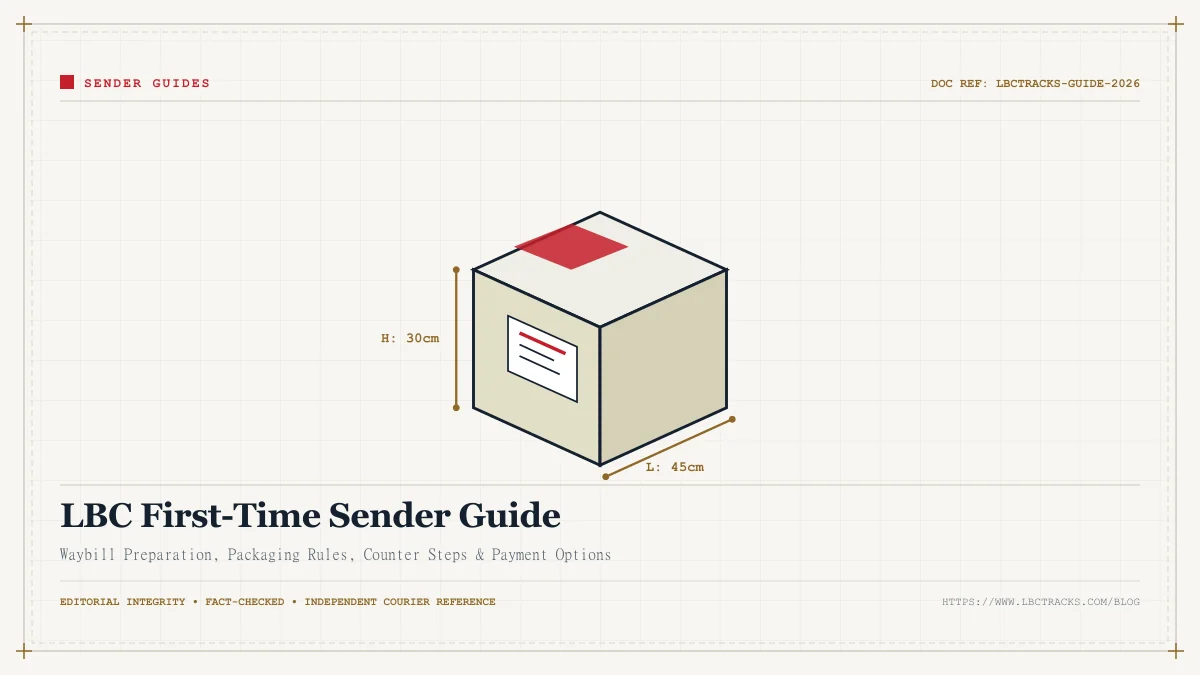
| N-Pack XL (Poly Pouch) | 45 cm x 30 cm | Up to 2.0 kg | Multiple clothing pieces, soft textiles, boxed accessories, flat merchandise. |
| Kilobox Mini / Slim | 26 cm x 18 cm x 9 cm | Up to 1.0 - 2.0 kg | Smartphones, luxury watches, packaged electronics, small delicate gifts. |
| Kilobox Small (KB Small) | 30 cm x 22 cm x 15 cm | Up to 3.0 kg | Footwear, small home electronics, beauty sets, hardware tools, boxed perfumes. |
| Kilobox Medium (KB Medium) | 38 cm x 27 cm x 20 cm | Up to 5.0 kg | Kitchen appliances, multiple shoe pairs, apparel bundles, ceramic gift sets. |
| Kilobox Large (KB Large) | 45 cm x 35 cm x 25 cm | Up to 10.0 kg | Heavy hardware, bulk e-commerce inventory, winter jackets, computer parts. |
| Custom Recycled Boxes (BYOB) | Custom Dimensions | Subject to cargo limits | Must be clean, structurally sturdy, free of old barcode labels, and unsealed. |
Fragile Goods & Cushioning: Protecting Breakables Before Counter Intake
If your shipment contains breakable merchandise—such as glassware, bottled liquids, ceramic kitchenware, or sensitive computer electronics—counter staff will examine how effectively the internal contents are cushioned before accepting the parcel.
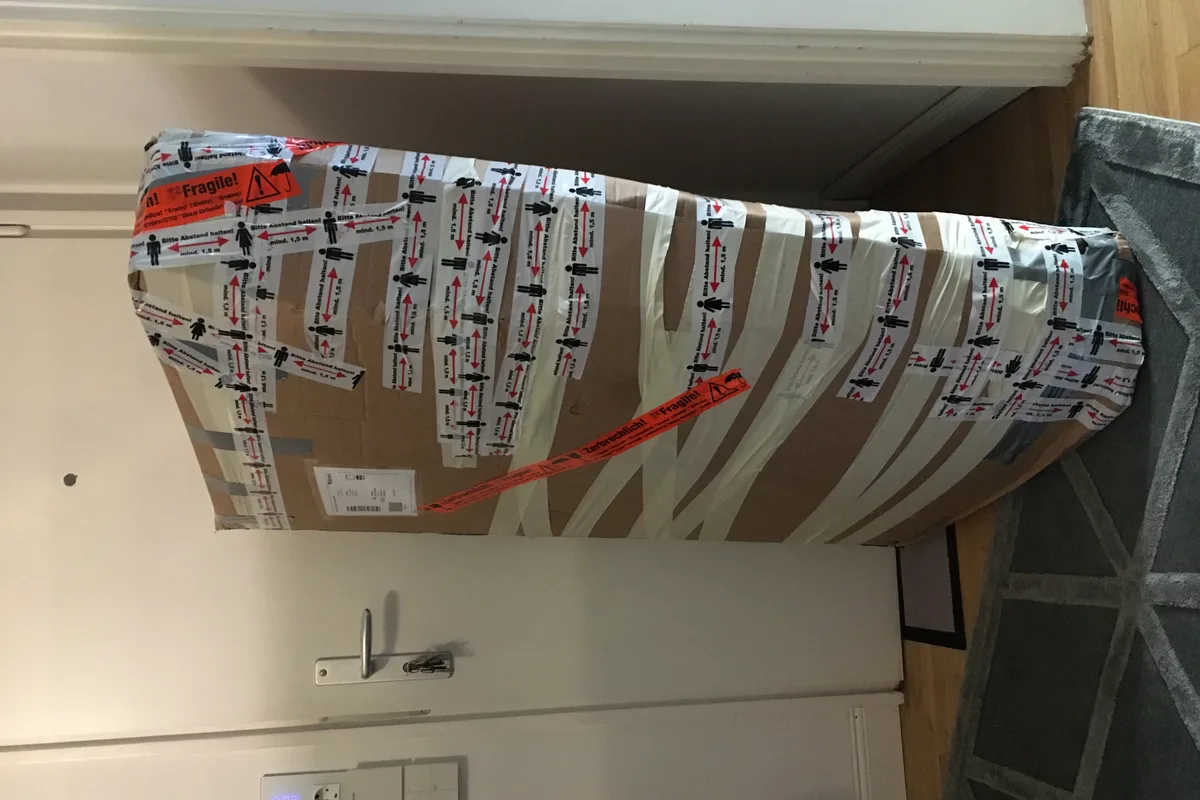
While couriers apply high-visibility "FRAGILE - HANDLE WITH CARE" adhesive stickers to outer cartons upon request, stickers alone cannot shield delicate items from vibrations on inter-island ferry crossings, sorting conveyors, or bumpy provincial roads. Senders must enforce basic defensive packaging rules:
- The 5-Centimeter Perimeter Rule: Maintain at least 5 centimeters (2 inches) of dense cushioning material between the fragile item and every interior wall of the carton. If an exterior impact crushes the corner of the box, the buffer zone absorbs the shock before it reaches the product.
- Individual Unit Wrapping: Never pack multiple glass bottles, mugs, or plates touching each other. Wrap each piece individually in several layers of high-density air bubble wrap, securing each bundle with tape.
- Liquid Containment & Double-Bagging: Essential oils, cosmetic toners, lotions, and non-flammable syrups must be sealed in leakproof plastic Ziploc bags before placing them in the box. Even if a cap loosens under air pressure, the liquid cannot breach the exterior carton or ruin adjacent parcels.
- The Shake Test: Before approaching the counter, gently close the unsealed box flaps and give the carton a mild shake. If you hear items sliding, shifting, or clinking, add more crumpled kraft paper or void fill until the contents remain completely stationary.
Under LBC Terms and Conditions of Carriage, damage claims may be officially denied if an inspection reveals that breakable items were tendered without customary protective cushioning. Taking ten extra minutes to wrap delicate items properly protects both your merchandise and your insurance eligibility.
Weighing, Sizing & The Philippine Domestic Volumetric Formula
One of the most common surprises for first-time senders is discovering that a lightweight parcel costs significantly more to ship than anticipated. In commercial logistics, freight tariffs are not determined solely by what a package weighs on a digital scale; they are governed by dimensional volumetric weight.
Cargo holds on passenger airplanes and line-haul courier vans are constrained by physical volume just as much as weight. A box filled with fluffy stuffed toys or foam packing peanuts weighs very little on a scale, but it occupies valuable spatial capacity that prevents other revenue-generating cargo from being loaded.
The 3,500 Domestic Volumetric Formula
For instance, consider a box measuring 40 cm x 30 cm x 25 cm that contains a decorative handcrafted straw basket weighing only 1.2 kg on the scale:
Volumetric Weight = (40 x 30 x 25) / 3,500 = 30,000 / 3,500 = 8.57 kg.
In this scenario, LBC bills the shipment based on 9.0 kg of freight space—not the 1.2 kg recorded on the scale. Senders can save substantial money by selecting the snuggest box size possible, trimming excess cardboard flaps, and eliminating wasted empty volume inside the carton.
The 4-Step Counter Intake Routine from Queue to Receipt
When you step inside your chosen LBC branch, the intake sequence proceeds through four standardized operational steps:
Fill Out Consignee Details via Kiosk or Paper Slip
Most modern branches feature digital touch-screen kiosks. Tap "Send Package," select your service type (Door-to-Door Delivery or Cash on Pick-Up), and input the recipient's full address and mobile number. The kiosk prints a temporary transaction ticket. If a kiosk is unavailable, fill out the physical paper Consignee Slip with clean, legible block letters.
Teller Inspection, Sizing & Scale Measurement
Approach the intake counter when your queue number is called. Present your unsealed box and transaction slip. The teller inspects internal contents for prohibited items, places the carton on the calibrated digital scale, and measures the length, width, and height with a counter ruler.
Reinforced Sealing and Barcode Waybill Adhesion
With contents verified, the teller applies heavy-duty, reinforced LBC adhesive tape across all top flaps, side seams, and bottom joints. The teller prints the official adhesive waybill sticker featuring a machine-readable 1D linear barcode and adheres it securely to the top face of the carton.
Freight Settlement and Receipt Safeguarding
Pay the calculated freight charges via cash, GCash, Maya, or bank card. The teller hands you the machine-printed thermal receipt. This paper slip contains your vital 12-digit waybill tracking number, transaction timestamp, declared value, and originating branch code.
Timing Your Drop-Off: Morning vs. Afternoon Shuttle Dispatch Cut-Offs
The time of day you tender your shipment at the branch directly dictates how quickly it arrives at its final destination. Parcels dropped off ten minutes after a shuttle cut-off sit inside the branch storage room for an extra 24 hours awaiting the next scheduled transport.
Branches do not dispatch packages individually; they accumulate outbound parcels in rolling cages or security bags for consolidated pickup by regional line-haul shuttle vans.
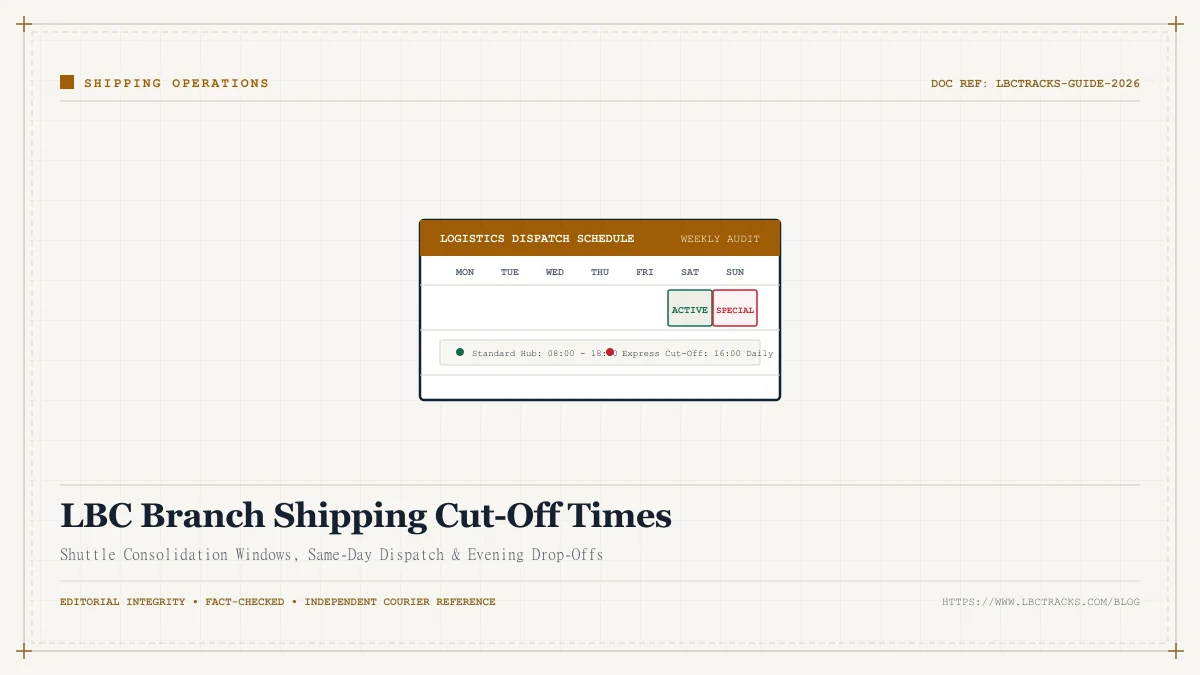
- Morning Shuttle Cut-Off (Street Branches: 11:30 AM - 1:00 PM): Parcels tendered before noon depart on the midday shuttle run to the central exchange hub. They enter the primary sorting shift that evening and often achieve next-day delivery within regional corridors.
- Afternoon Final Cut-Off (Mall Branches: 3:00 PM - 4:30 PM): Mall branches typically feature a later afternoon dispatch van. Shipments dropped off after 4:30 PM miss the final airport/port shuttle and are staged for departure the following morning.
- Weekend Dispatch Schedules: Saturday drop-offs usually feature a single morning cut-off (around 11:00 AM). Most Sunday drop-offs at mall branches remain staged in the branch vault until Monday morning line-haul routes resume.
Whenever possible, drop off outbound packages between 9:00 AM and 11:00 AM. Morning drop-offs ensure that your package catches the earliest available line-haul consolidation shuttle, maximizing the probability of on-time delivery.
Post-Drop-Off Best Practices: Tracking Verification and Waybill Privacy
Your responsibilities as a sender do not end when you walk out the branch door. To ensure a seamless delivery journey for your recipient, follow these critical post-drop-off best practices:
- Photograph the Receipt Immediately: Thermal receipts fade rapidly when exposed to heat or friction in wallets. Snap a crisp, well-lit smartphone photo of the receipt immediately after exiting the branch to preserve a permanent digital archive.
- Perform an Initial Tracking Check (2 to 4 Hours Later): Visit our online tracking portal and key in your 12-digit waybill number. Within a few hours of drop-off, the initial intake scan milestone—"Accepted at Branch" or "Forwarded to Exchange Hub"—should appear in the system.
- Protect Customer Data Privacy: If you are an online seller sharing proof of shipping with a customer on social media, review your photo first. Under the Data Privacy Act of 2012 (Republic Act No. 10173), redact or blur out the customer's personal contact number and complete residential street address before publishing tracking receipts publicly.