How LBC RUSH Accelerates the Domestic Logistics Pipeline
When an urgent legal contract, passport replacement, critical replacement machine component, or medical supply must travel across the Philippine archipelago, standard courier transit windows are often insufficient. Standard retail parcel delivery relies on regional consolidation networks: parcels dropped off at neighborhood branches are loaded onto evening consolidation vans, sorted overnight inside centralized sorting warehouses (such as Pasig or Subic), and queued for surface line-haul trucking or maritime roll-on/roll-off (RO-RO) ferries. While highly economical for everyday e-commerce, standard routing entails multi-day line-haul staging.
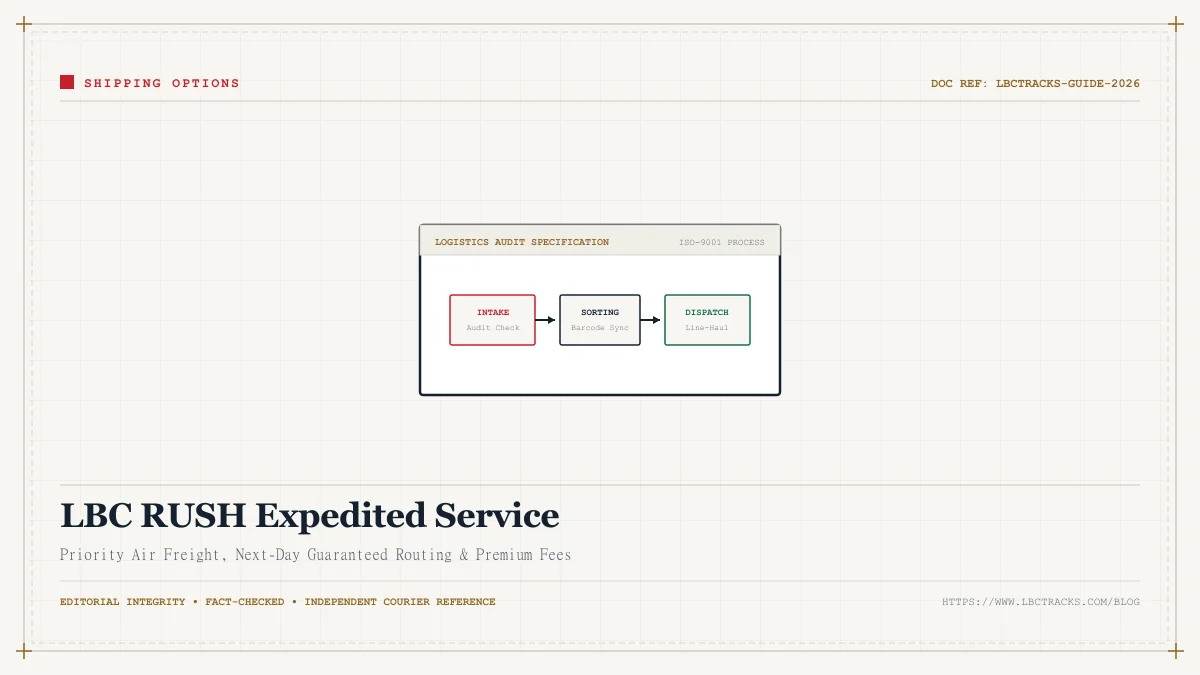
To address time-critical shipments, LBC Express operates its specialized priority air product, widely known as LBC RUSH Delivery. Unlike standard surface freight, RUSH operates on an accelerated operational bypass. When you declare and book a consignment as RUSH at an authorized branch counter, the parcel is segregated from regular postal volume at intake. Branch tellers affix high-visibility priority handling airway bill stickers and place the parcel into dedicated security pouches.
Rather than waiting for the standard late-afternoon general consolidation shuttle, RUSH consignments are dispatched on early midday airport transfer runs. These runs deliver cargo straight to regional air cargo handling facilities, such as the Pasay Airport Exchange adjacent to Ninoy Aquino International Airport (NAIA) or the Mactan-Cebu International Airport (MCIA) gateway. There, parcels undergo expedited aviation security screening and are booked onto scheduled commercial carrier flights as priority belly-hold cargo.
The fundamental difference between LBC RUSH and standard express freight lies in aircraft booking tiers. Standard air courier parcels travel on commercial flights under "space-available" freight agreements—meaning if a passenger flight is weight-restricted due to excessive passenger baggage or adverse weather fuel requirements, standard cargo is offloaded to subsequent flights. RUSH consignments, by contrast, are booked under priority air manifests, ensuring guaranteed placement on the earliest available flight departure.
Eligible Air Corridors and Gateway Hub Architecture
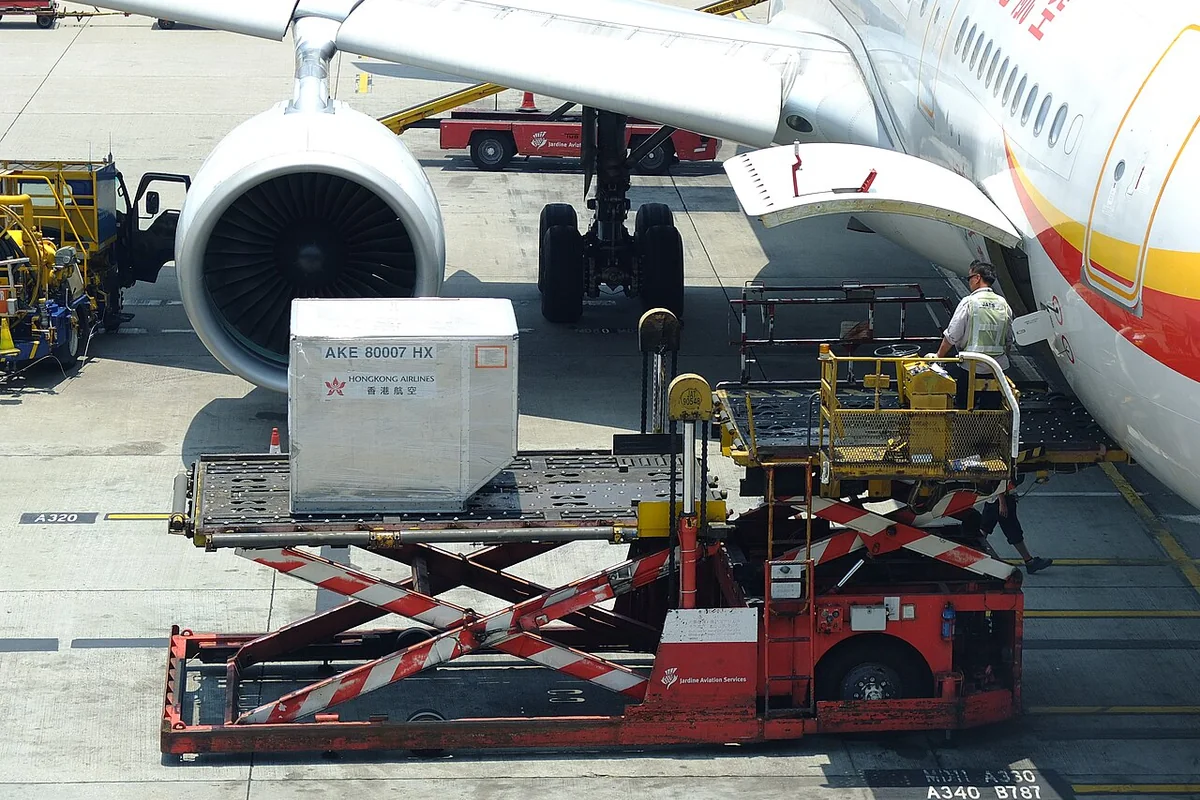
A frequent point of confusion among online merchants and retail senders is assuming that RUSH delivery guarantees overnight arrival anywhere in the country. In truth, rapid overnight line-haul transit is physically dictated by civil aviation infrastructure. Because commercial cargo aircraft and wide-body passenger liners only service chartered airport cities, next-business-day RUSH delivery operates strictly between designated primary air gateways.
If both the sender and the recipient reside within metropolitan economic zones connected by frequent daily passenger flights, RUSH consistently achieves its target next-day delivery window. Below are the core domestic air corridors supported by active air freight infrastructure across Luzon, the Visayas, and Mindanao:
| Origin Air Hub | Destination Air Hub | Daily Flight Frequency | Target Delivery Window | Last-Mile Servicing Mode |
|---|---|---|---|---|
| Metro Manila (MNL) | Metro Cebu (CEB) | Multiple Daily Flights | Next Business Day (Target) | Direct Doorstep Van / Motorcycle Rider |
| Metro Manila (MNL) | Davao City (DVO) | Multiple Daily Flights | Next Business Day (Target) | Direct Doorstep Van / Motorcycle Rider |
| Metro Manila (MNL) | Iloilo City (ILO) / Bacolod (BCD) | Multiple Daily Flights | Next Business Day (Target) | Regional Hub Direct Handover |
| Metro Manila (MNL) | Cagayan de Oro (CGY) | Multiple Daily Flights | Next Business Day (Target) | Northern Mindanao Air Cargo Hub |
| Metro Cebu (CEB) | Davao City (DVO) | Multiple Daily Flights | Next Business Day (Target) | Inter-VisMin Direct Flight Routing |
| Metro Manila (MNL) | Puerto Princesa (PPS) / Tacloban (TAC) | Daily Scheduled Flights | 1 to 2 Business Days | Provincial Gateway Air Hub |
Why Island Outposts and Remote Barangays Require Additional Transit Days
Understanding regional geography is vital when setting expectations for time-sensitive deliveries. If your recipient lives in an outlying municipality or remote island barangay—such as Batanes, Catanduanes, Bantayan Island, Camiguin, or Sulu—the parcel cannot be delivered purely by air. Once the aircraft lands at the regional airport gateway, the package must be transferred into maritime ferries, provincial shuttle vans, or inter-island barges to reach its final destination.
Consequently, courier companies transparently qualify RUSH delivery targets: the priority air leg moves at top speed to the nearest gateway airport, but final last-mile transport across maritime straits or mountainous roads follows standard provincial transit schedules. Always verify with your counter associate whether the destination address falls within the carrier's direct service radius or requires Out-of-Delivery Area (ODA) forwarding.
RUSH vs Standard Air Express vs Same-Day Delivery Compared
To select the correct shipping product and avoid overpaying for unnecessary priority tiers, senders must evaluate how RUSH compares against standard retail air express and localized same-day delivery services. Each service serves distinct operational use cases within the Philippine shipping landscape:
| Feature & Attribute | Same-Day Delivery | LBC RUSH Priority Air | Standard Air Express |
|---|---|---|---|
| Transit Speed Target | Within 6 to 12 Hours (Same Day) | Next Business Day (Target) | 2 to 4 Business Days |
| Geographic Reach | Intra-Metro Manila Only | Nationwide Major Airport Cities | Nationwide Doorstep & Branch Coverage |
| Transport Mode | Dedicated Ground Fleet / Motorcycles | Priority Commercial Aircraft Belly Cargo | Scheduled Air Cargo & Surface Feeder Vans |
| Branch Cut-Off Time | Early Morning (08:00 AM - 10:00 AM) | Morning Window (10:00 AM - 12:00 PM) | Late Afternoon (01:00 PM - 04:00 PM) |
| Eligible Package Formats | Document Pouches & Compact Boxes | N-Pack Pouches & Select Kiloboxes | All Pouches, Kiloboxes & Heavy Freight |
| Tariff Pricing Tier | Premium Same-Day Intra-City Tariff | High Premium Air Manifest Surcharge | Standard Domestic Retail Tariff |
Dropping off a parcel even 15 minutes after the morning RUSH cut-off window means your consignment cannot make the midday airport shuttle transfer. Late consignments stage overnight for the following day's morning flight run, adding a full 24 hours to your delivery timeline. For time-critical consignments, plan to arrive at the branch counter before 10:30 AM.
Step-by-Step Procedure for Booking an LBC RUSH Shipment
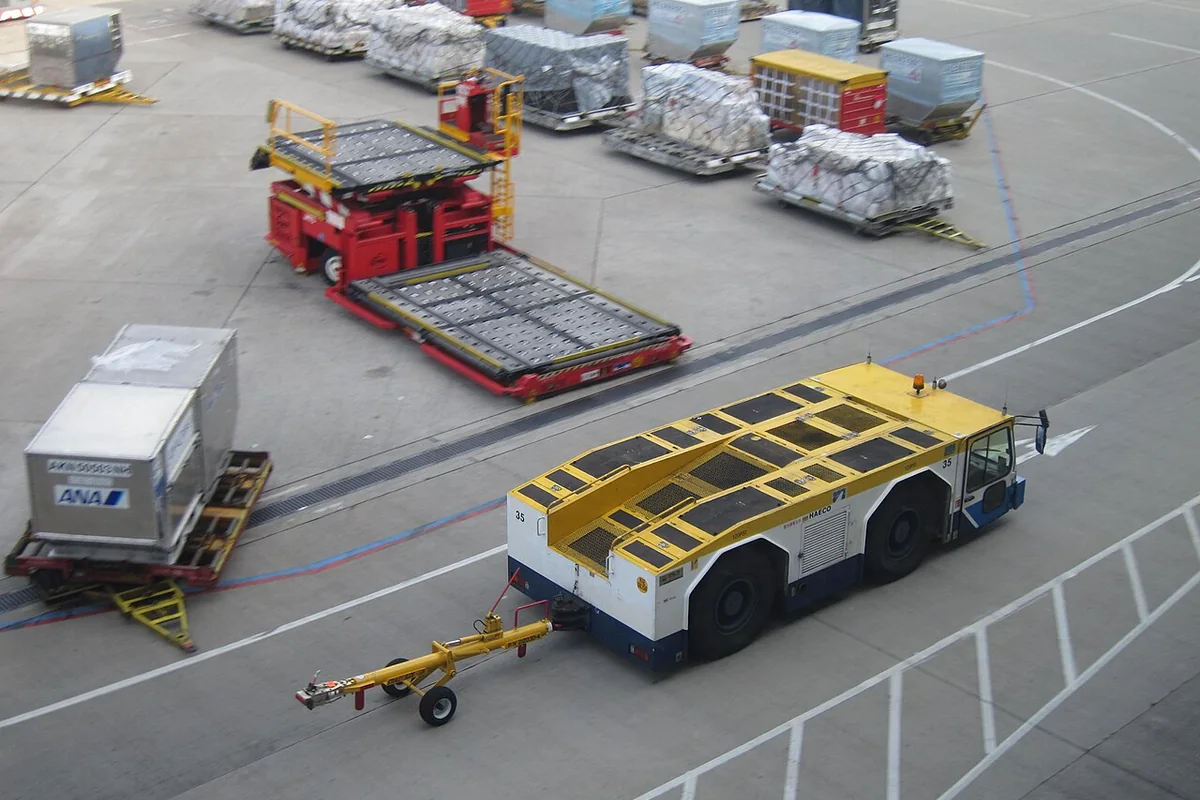
Booking an expedited shipment requires careful preparation at home and attention to branch counter protocol. Follow this verified checklist to guarantee that your RUSH package clears counter intake and airport security without delay:
Confirm Branch Cut-Off Hours and Service Availability
Not all retail branches accept RUSH shipments on identical schedules. Standalone street branches generally have earlier shuttle cutoff times (often 10:30 AM to 11:30 AM), whereas premier airport or commercial mall branches may extend acceptance until 12:00 PM. Call your local branch or visit early in the morning to confirm same-day airport transfer departure times.
Keep Your Package Unsealed for Mandated Counter Inspection
Under Philippine civil aviation security directives, courier associates must physically inspect the internal contents of all air cargo shipments before sealing. Do not seal your box or pouch with tape at home. Present the open carton or envelope to the teller so they can verify that no prohibited hazardous goods or restricted electronics are enclosed.
Complete Waybill Details with Recipient Mobile Number and Landmark
Delivery couriers in destination cities rely heavily on automated dispatch texts and phone coordination. Provide the complete recipient name, active 11-digit Philippine mobile phone number, exact street number, barangay, city, province, and a recognizable local landmark (such as a nearby chapel, school, or subdivision gate).
Specify RUSH Priority Service and Verify Waybill Coding
Explicitly request RUSH Priority Air Service at the counter. Ensure the teller applies the distinctive RUSH priority routing sticker to the exterior packaging and verifies that the 12-digit waybill printout indicates priority air handling classification.
Settle Freight Tariffs and Safeguard Your Official Receipt
Pay the applicable freight charges via cash, GCash, Maya, or bank debit card. Retain the printed official thermal receipt: the 12-digit tracking number printed below the linear barcode is your primary key for monitoring real-time flight transit progress.
Tariffs, Weight Calculations and Valuation Insurance Rules
Below is an illustrative overview of rate structures across typical regional air corridors. Senders should verify live rates at branch acceptance counters or consult the official LBC shipping rates and tariffs reference:
| Packaging / Weight Tier | Intra-Manila to Cebu (CEB) | Intra-Manila to Davao (DVO) | Intra-Manila to Iloilo (ILO) | Standard Express Equivalent |
|---|---|---|---|---|
| N-Pack Slim / Small Document (up to 500g) | PHP 160 - PHP 210 | PHP 175 - PHP 230 | PHP 160 - PHP 210 | PHP 100 - PHP 140 |
| N-Pack Medium Pouch (up to 3.0 kg) | PHP 280 - PHP 360 | PHP 310 - PHP 400 | PHP 280 - PHP 360 | PHP 185 - PHP 250 |
| N-Pack Large Pouch (up to 5.0 kg) | PHP 420 - PHP 540 | PHP 460 - PHP 590 | PHP 420 - PHP 540 | PHP 280 - PHP 380 |
| Kilobox Mini / Small Box (up to 3.0 kg) | PHP 390 - PHP 510 | PHP 430 - PHP 560 | PHP 390 - PHP 510 | PHP 260 - PHP 340 |
| Additional Kilogram Increment (per kg) | PHP 95 - PHP 135 / kg | PHP 110 - PHP 155 / kg | PHP 95 - PHP 135 / kg | PHP 65 - PHP 90 / kg |
Declared Value Coverage and Carrier Liability (RA 7394)
Under Article 1733 to 1754 of the Civil Code of the Philippines governing common carriers and the provisions of Republic Act 7394 (Consumer Act of the Philippines), couriers bear strict responsibility for goods entrusted to their custody. Basic domestic shipping tariffs generally include a statutory baseline valuation coverage (typically up to PHP 500 for small retail pouches).
When sending high-value electronics, jewelry, specialized optical equipment, or confidential corporate tenders via RUSH, senders should declare the full commercial value of the consignment on the waybill. Declaring a higher value incurs a modest valuation surcharge (typically 1% to 2% of the declared amount above baseline coverage, subject to applicable minimum fees). In the rare event of documented line-haul loss, theft, or catastrophic aircraft baggage hold damage, reimbursement claims are assessed against this legally declared valuation rather than the minimum default tariff.
Volumetric Weight (kg) = [ Length (cm) × Width (cm) × Height (cm) ] ÷ 3,500 For example, an ultralight box of apparel measuring 35 cm × 25 cm × 20 cm occupies 17,500 cm³. Dividing by 3,500 yields 5.0 kg volumetric weight. If the actual scale weight is only 1.2 kg, billing is assessed on the 5.0 kg volumetric tier.
Strict Aviation Safety Regulations and Prohibited Air Freight Items
Because LBC RUSH packages are transported inside the cargo holds of passenger and cargo aircraft, air logistics are governed by stringent international and domestic aviation safety regulations enforced by the Civil Aviation Authority of the Philippines (CAAP), the International Air Transport Association (IATA), and the International Civil Aviation Organization (ICAO).
Items that are acceptable for surface trucking or maritime sea cargo may be strictly banned from passenger airline holds. Tendering prohibited goods not only results in shipment rejection but can also lead to legal confiscation and regulatory penalties.
- Lithium-Ion Batteries and Standalone Power Banks: Spare mobile phone batteries, external rechargeable power banks, uninstalled lithium power packs, and electric scooter batteries pose severe fire risks at high altitude and are strictly barred from commercial air express.
- Aerosols, Compressed Gases and Flammables: Pressurized hairsprays, deodorant sprays, spray paint, butane canisters, lighter fluid, and alcohol-based sanitizers exceeding permitted liquid volumes are prohibited.
- Perfumery and Flammable Cosmetics: High-concentration alcohol perfumes, nail polish, and solvent-based acetone adhesives carry low flashpoints and cannot fly on commercial passenger cargo manifests.
- Corrosives, Explosives and Hazardous Chemicals: Bleach, industrial acids, mercury thermometers, firearms, live ammunition, firecrackers, and magnetic materials that interfere with avionics navigation systems.
- Perishable Fresh Meats and Unsealed Foodstuffs: Raw seafood, fresh meats, and perishable dairy products that spoil during transit and lack required agricultural sanitary transport permits from the Bureau of Animal Industry (BAI).
All air cargo pallets pass through high-energy dual-view X-ray scanners at airport gateway security checkpoints. If security screeners detect an undeclared lithium battery or flammable liquid inside an LBC RUSH package, the entire consignment is pulled from the aircraft pallet, transferred to airport police holding, and returned to the originating branch. The sender forfeits all paid RUSH tariffs, and line-haul transit is indefinitely delayed.
Tracking Milestone Scans for Priority Air Consignments
Real-time tracking visibility is vital when managing time-sensitive shipments. Because RUSH packages move rapidly through multiple high-security logistics nodes, their digital tracking history displays frequent milestone scan events on online tracking portals.
Using the 12-digit waybill number printed on your counter slip, you can monitor your shipment's progress across each operational stage:
- Accepted at Branch / Picked Up: Confirms the package has been accepted at the originating branch counter, inspected for prohibited goods, and tagged with priority RUSH coding.
- In Transit to Airport Gateway Exchange: Indicates the consignment is aboard the midday dedicated shuttle traveling directly to the central air cargo exchange (e.g., Pasay or Mactan).
- Received at Central Air Hub / Screened: The package has cleared CAAP X-ray inspection, been weighed on certified aviation scales, and placed into a Unit Load Device (ULD) cargo container.
- Manifested on Departure Flight: Confirms the ULD container has been loaded into the aircraft hold and assigned to an active commercial airline flight schedule.
- Arrived at Destination Airport Exchange: The aircraft has landed at the destination city (e.g., Davao International Airport), cargo containers have been de-palletized, and individual parcels have been scanned into local delivery inventory.
- Out for Delivery / Dispatched with Rider: The package has been assigned to a local delivery courier van or motorcycle rider for priority same-day doorstep handover.
Troubleshooting Flight Delays, Weather Groundings and Missed Deadlines
While LBC RUSH achieves high on-time delivery rates across major airport corridors, external operational forces can occasionally disrupt transit schedules. In an archipelagic nation prone to severe weather patterns, understanding what happens during logistics delays helps senders manage downstream expectations effectively.
Tropical Storms, Typhoon Signals and Civil Aviation Groundings
During typhoon season, the Civil Aviation Authority of the Philippines (CAAP) routinely issues aviation safety advisories grounding domestic flights across storm paths. When passenger and cargo flights are canceled due to severe weather, torrential rain, or runway windshear, all air freight manifests are temporarily suspended.
In such situations, packages remain safely locked inside climate-controlled airport warehouse vaults under 24-hour security monitoring. As soon as CAAP lifts runway restrictions and airlines resume flights, RUSH consignments receive first-priority placement on the first outbound departure manifest, ahead of accumulated general freight volume.
NAIA Runway Congestion and Airport Diversions
Peak evening runway traffic at Manila's Ninoy Aquino International Airport occasionally results in aircraft diversions to Clark International Airport (CRK) or secondary holding patterns. If an incoming cargo flight is diverted or experiences ground baggage handling bottlenecks, destination hub sorting may be delayed by several hours, potentially pushing doorstep delivery from late morning to late afternoon.
If your tracking status displays "Operational Delay - Rescheduled for Next Delivery Cycle" or appears inactive for more than 24 hours, prepare your 12-digit waybill code and reach out to official customer support via their hotline, verified social channels, or your originating branch counter. For contact phone numbers and email escalation protocols, see our comprehensive guide on contacting LBC customer support.