Executive Summary: How the Bureau of Customs (BOC) Regulates Inbound LBC Shipments
Whether you are awaiting an international express air mailer from the United States, an e-commerce order from Japan, or a consolidated sea freight Balikbayan container from Dubai, every international shipment destined for the Philippines enters the sovereign regulatory jurisdiction of the Bureau of Customs (BOC). While domestic shipments move freely between Philippine islands subject only to carrier safety rules, international freight is governed by federal customs statutes, national tariff codes, and cross-border trade regulations.
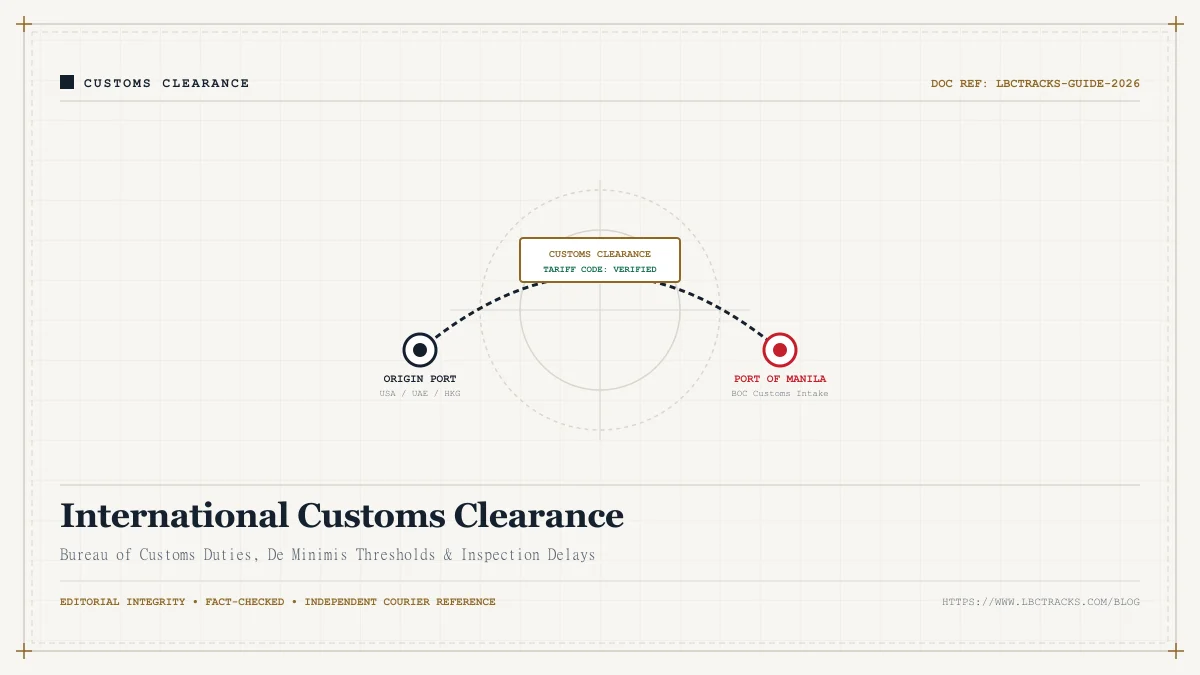
LBC Express operates as an accredited international freight forwarder and licensed customs brokerage house. However, it is essential to recognize that LBC does not write customs legislation, establish tax exemption ceilings, or assess tariff rates. Courier personnel work inside designated customs bonded facilities—such as the Ninoy Aquino International Airport (NAIA) Airmail Distribution Center and the Manila International Container Terminal (MICT)—facilitating physical presentation and documentation while customs examiners independently evaluate cargo admissibility.
Below is a summary of how inbound international shipments are routed through the Bureau of Customs clearance apparatus:
| Shipment Valuation Tier | Statutory Classification | Customs Duty & Tax Status | Estimated Processing Turnaround |
|---|---|---|---|
| Up to PHP 10,000 (FOB/FCA Value) | De Minimis Importation (CMTA Section 423) | 100% Exempt from Import Duty and 12% Value Added Tax (VAT) | Fast-Track Green Lane: 24 to 48 Hours upon manifest entry |
| PHP 10,001 to PHP 50,000 | Informal Importation Entry | Subject to item tariff rate + 12% VAT + customs processing fee | Yellow / Red Lane: 2 to 4 Business Days for assessment |
| Above PHP 50,000 or Commercial Lots | Formal Commercial Importation Entry | Full commercial classification, import duties, 12% VAT, brokerage filing | Formal Clearance: 3 to 7 Business Days pending broker settlement |
| Balikbayan Boxes (Qualified OFWs) | Personal & Household Effects (CMTA Section 800g) | Exempt up to PHP 150,000 per calendar year (Max 3 shipments/year) | Consolidated Container Yard: 3 to 5 Days during standard periods |
The PHP 10,000 De Minimis Rule (CMTA Section 423) Explained
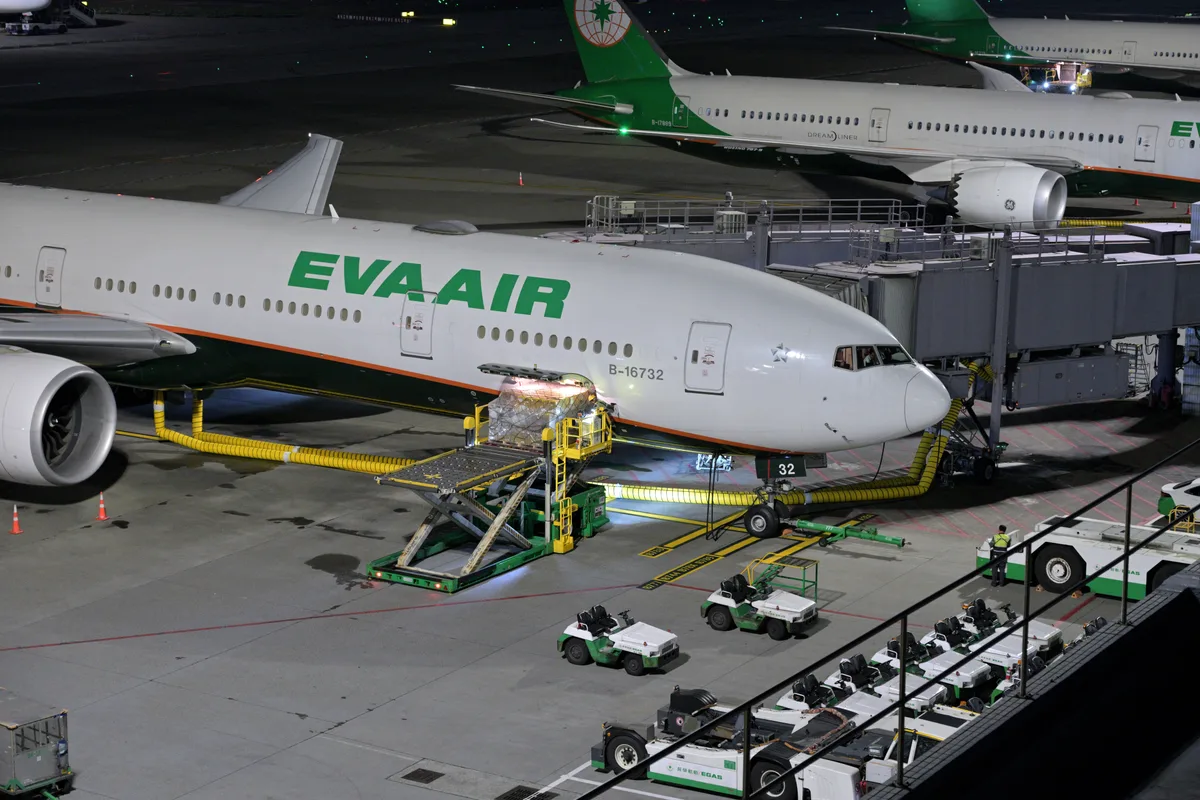
The centerpiece of consumer international shipping into the Philippines is the De Minimis threshold established under Section 423 of the Customs Modernization and Tariff Act (CMTA / Republic Act No. 10863) and implemented through Department of Finance Customs Administrative Order (CAO) No. 02-2016.
Under historical Philippine tariff law, the de minimis threshold was set at a negligible PHP 10, meaning almost every imported consumer package incurred complex assessment fees. Under the modern CMTA framework, no import duties or value-added tax are collected on goods imported through postal or courier services when the total value does not exceed PHP 10,000.
To determine whether your LBC shipment qualifies for tax-exempt De Minimis clearance, understand these critical statutory definitions:
- Valuation Basis (FOB or FCA): The PHP 10,000 ceiling applies specifically to the Free on Board (FOB) or Free Carrier (FCA) value of the merchandise. This represents the actual cost paid for the product itself as evidenced on the seller commercial invoice or store receipt. In standard consumer shipments, international freight shipping charges and carrier insurance are not included when testing against the PHP 10,000 threshold.
- Foreign Currency Conversion: The Bureau of Customs publishes official weekly foreign exchange conversion rates every Friday. If you purchase an item overseas for $175 USD, the BOC converts that amount into Philippine Pesos using the prevailing government exchange rate for that entry week. If $175 USD converts to PHP 9,850, your package is fully exempt; if exchange fluctuations push it to PHP 10,050, the entire shipment becomes dutiable.
- Anti-Splitting Regulations: The law strictly prohibits artificial parcel splitting. Senders cannot divide a single commercial purchase worth PHP 30,000 into three separate PHP 10,000 boxes dispatched simultaneously to the same consignee to evade taxes. When customs manifests identify multiple shipments from the same supplier arriving within the same air or sea conveyance, the BOC consolidates their value.
Tax and Duty Calculations for Shipments Exceeding PHP 10,000
When an imported parcel exceeds the PHP 10,000 De Minimis threshold, customs exemption ends entirely. It is a common misconception that buyers only pay taxes on the amount above PHP 10,000; in reality, once the threshold is crossed, import duty and taxes are assessed on the full value of the shipment.
Furthermore, unlike the De Minimis eligibility test, actual customs duty calculations are computed on the complete CIF (Cost, Insurance, and Freight) or Dutiable Value. This means international shipping costs and insurance premiums are factored directly into the taxable base.
Step-by-Step Tariff Calculation Breakdown
Here is the standard mathematical formula enforced by the Bureau of Customs to calculate total payable import fees:
Balikbayan Box Privilege for Overseas Filipino Workers (CMTA Section 800g)
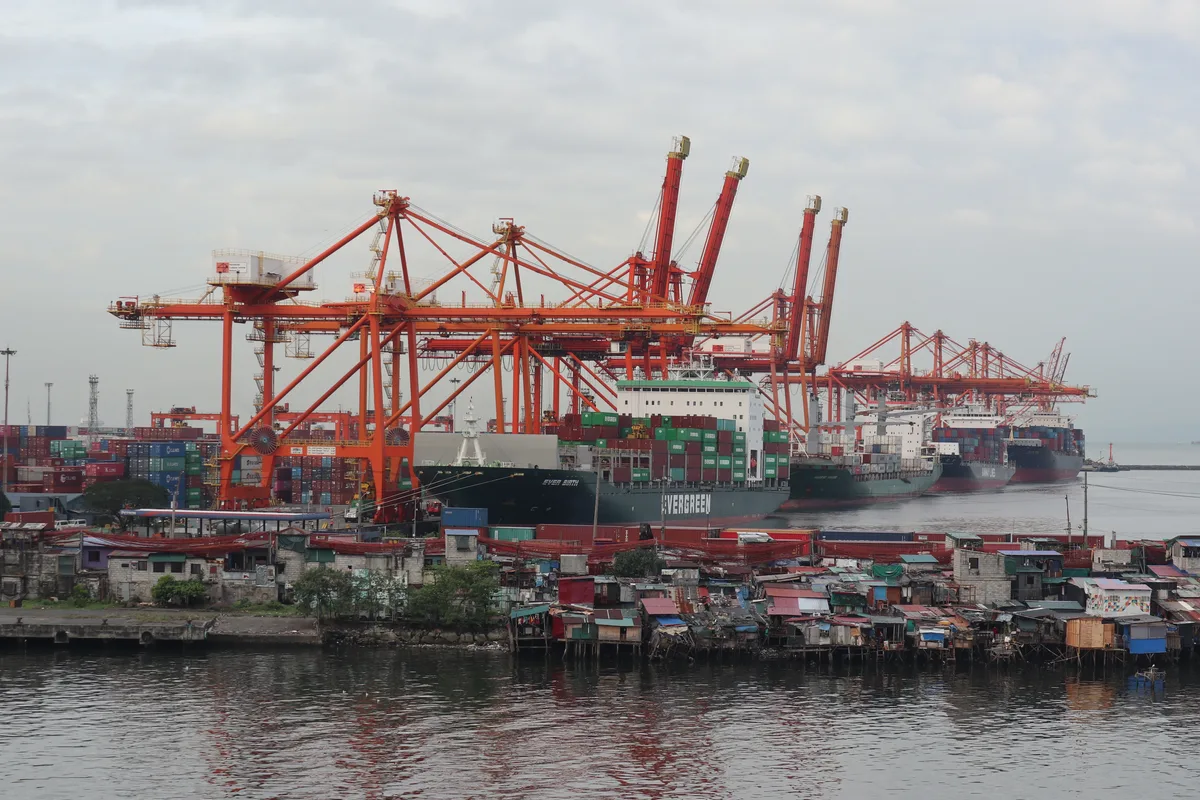
For millions of Filipino families, the most vital international logistics channel is the traditional Balikbayan box. Under Section 800(g) of the Customs Modernization and Tariff Act, qualified Overseas Filipino Workers (OFWs) and non-resident Filipinos enjoy substantial statutory tax exemptions that operate independently of the standard PHP 10,000 De Minimis rule.
The law recognizes Balikbayan boxes as vehicles of familial support, exempting qualified shipments from all customs duties and import VAT up to a maximum total value of PHP 150,000 per calendar year.
| Compliance Requirement | Statutory Standard | Documentation Required |
|---|---|---|
| Sender Eligibility | Qualified Overseas Filipino Workers (OFW with OWWA registration, POEA contract, or overseas work visa), or non-resident Filipinos holding dual citizenship. | Clear photocopy of Philippine Passport (biopage and signature) plus official proof of OFW status (e.g., valid work permit or visa). |
| Annual Frequency & Value Limit | Maximum of 3 Balikbayan box consignments per calendar year; aggregate total FOB value cannot exceed PHP 150,000 annually. | Signed Information Sheet declaring previous Balikbayan shipments sent during the current calendar year. |
| Eligible Package Contents | Strictly limited to personal effects, household goods, non-commercial gifts, and clothing. Goods must not be intended for commercial resale. | Comprehensive Itemized Packing List specifying item counts, descriptions, and estimated values. |
| Quantity Restrictions | Items must not be in commercial quantities (e.g., no more than 1 duplicate consumer electronic item, no wholesale pallets of perfume). | BOC container yard inspection verifies that carton contents reflect normal personal household quantities. |
Regulated Imports: Government Clearances and Import Permits
Even if an imported package is valued below the PHP 10,000 De Minimis ceiling, it may still be subjected to physical seizure or administrative customs holds if the contents fall under regulated or restricted product categories. The Bureau of Customs enforces trade restrictions on behalf of specialized Philippine regulatory agencies.
Before shipping specialized goods via LBC international air or sea cargo, review the required agency clearance permits below:
| Regulated Category | Governing Regulatory Agency | Clearance Requirement & Consumer Rule |
|---|---|---|
| Medicines, Pharmaceuticals & Bulk Supplements | Food and Drug Administration (FDA) | Personal quantities require a licensed Philippine physician's prescription. Commercial volumes require an FDA Certificate of Product Registration (CPR) and License to Operate (LTO). |
| Cosmetics, Skincare & Personal Care | Food and Drug Administration (FDA) | Personal quantities (under 2 kg or standard vanity sets) enter freely. Wholesale quantities of identical lotions or serums require an FDA Cosmetic Notification permit. |
| Wireless Transceivers, Drones & Two-Way Radios | National Telecommunications Commission (NTC) | Radio frequency transmitters, commercial WiFi repeaters, and heavy drone avionics require an NTC Import Permit to verify frequency compliance. |
| Agricultural Seeds, Plants & Soil | Bureau of Plant Industry (BPI) | Live plant cuttings, agricultural seeds, and fresh fruits require a Phytosanitary Clearance to prevent foreign agricultural pests. |
| Processed Meats & Dairy Products | Bureau of Animal Industry (BAI) | Commercial animal proteins require Sanitary and Phytosanitary Import Clearances (SPSIC). Uncanned meat products face strict African Swine Fever (ASF) confiscation. |
| Optical Storage Media & Computer Drives | Optical Media Board (OMB) | Commercial imports of mastering equipment or commercial hard drives require OMB registration and import permits. |
Decoding Tracking Statuses: "Held by Customs" and Resolving Delays
When monitoring an international package on our tracking tool, seeing an alert like "Held by Customs" or "Under Customs Examination" can be unsettling. However, a customs hold does not mean your package is lost or confiscated; in most instances, it represents a routine administrative stop requiring additional documentation or tariff settlement.
Top Causes of Customs Examination Holds
Customs examiners place shipments into physical holding for three primary reasons:
- Missing or Illegible Commercial Invoice: The merchant attached an exterior invoice envelope, but the paper slip was damaged or lost in flight, leaving customs officials unable to verify the item's declared value.
- Suspected Value Undervaluation: The sender declared a brand-new high-end smartphone at "$20 USD" to bypass De Minimis limits. Customs officers flag obvious discrepancies and require official proof of purchase.
- Random X-Ray Screening Anomaly: The package triggered an automated density alarm during cargo X-ray screening, requiring customs officers and LBC brokerage personnel to perform a joint physical unboxing inspection.
Actionable Step-by-Step Resolution Process
If your tracking reflects a customs hold lasting more than 48 hours, follow these steps to secure release:
Bonded Warehouse Demurrage, Storage Surcharges & Statutory Abandonment Rules
To prevent costly demurrage penalties or legal forfeiture of your merchandise, respond immediately to any communications from LBC's brokerage clearance team. If you decide to dispute an over-assessment of customs duties, file a formal Request for Re-Appraisal under CMTA Section 1100 within the statutory window while securing an official storage hold request.
Under Section 1129 of the Customs Modernization and Tariff Act (CMTA / RA 10863), imported cargo is deemed legally abandoned if the consignee fails to file an import entry within thirty (30) calendar days from the date of final cargo discharge, or fails to claim the goods within fifteen (15) calendar days after tax assessment. Once declared abandoned, the shipment becomes property of the Philippine government and is subject to public auction or condemnation.