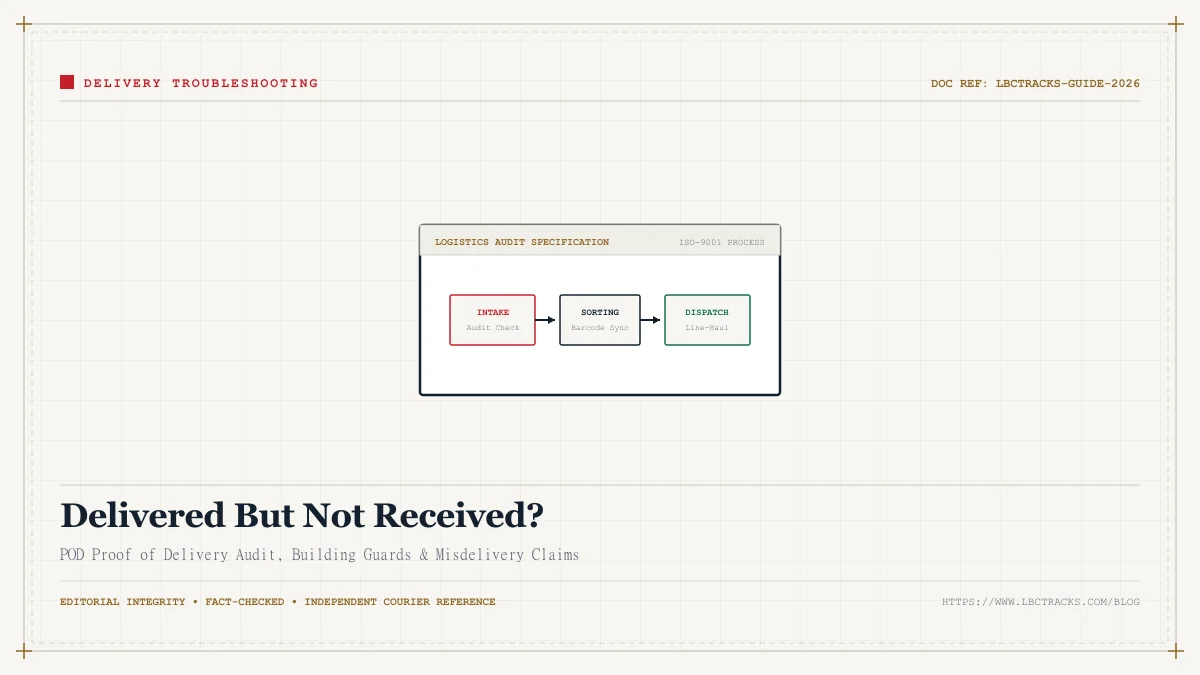
Immediate Triage: Don't Panic When Tracking Displays "Delivered"
Few tracking updates create more instantaneous dread than refreshing your screen to see "Delivered - Received by [Name]" when you are standing in an empty living room with no package in sight. The immediate instinct is to assume theft, fraud, or complete package loss. However, logistics field statistics reveal a reassuring reality: over eighty percent of all "Delivered But Not Received" inquiries in the Philippines are resolved within twenty-four hours without loss of merchandise.
When an LBC system logs a "Delivered" timestamp, it confirms that a delivery rider or van crew reached the destination zone, executed a terminal status change, and recorded an acknowledgment. To recover your item quickly and preserve your legal claims, you must avoid emotional confrontation and execute a systematic, evidence-based investigation.
Courier delivery in Philippine urban and provincial neighborhoods relies heavily on informal community handovers. Condominium front desks, subdivision security guardhouses, extended family households, and sari-sari store neighbors frequently receive parcels on behalf of absent consignees. Understanding where to look first and how to audit the official Proof of Delivery (POD) will resolve the issue in minutes.
Under LBC terms of carriage and Department of Trade and Industry (DTI) courier regulations, complaints regarding misdelivery or disputed delivery signatures must be formally reported within 24 to 48 hours of the recorded delivery timestamp. Delaying your report makes it significantly harder for the delivery hub to interview the assigned rider while route memories are fresh.
The Five Most Common Reasons for a Disputed "Delivered" Status
Before concluding that your package was stolen or misdelivered to another city, evaluate the five most frequent operational scenarios that trigger a false delivery alarm:
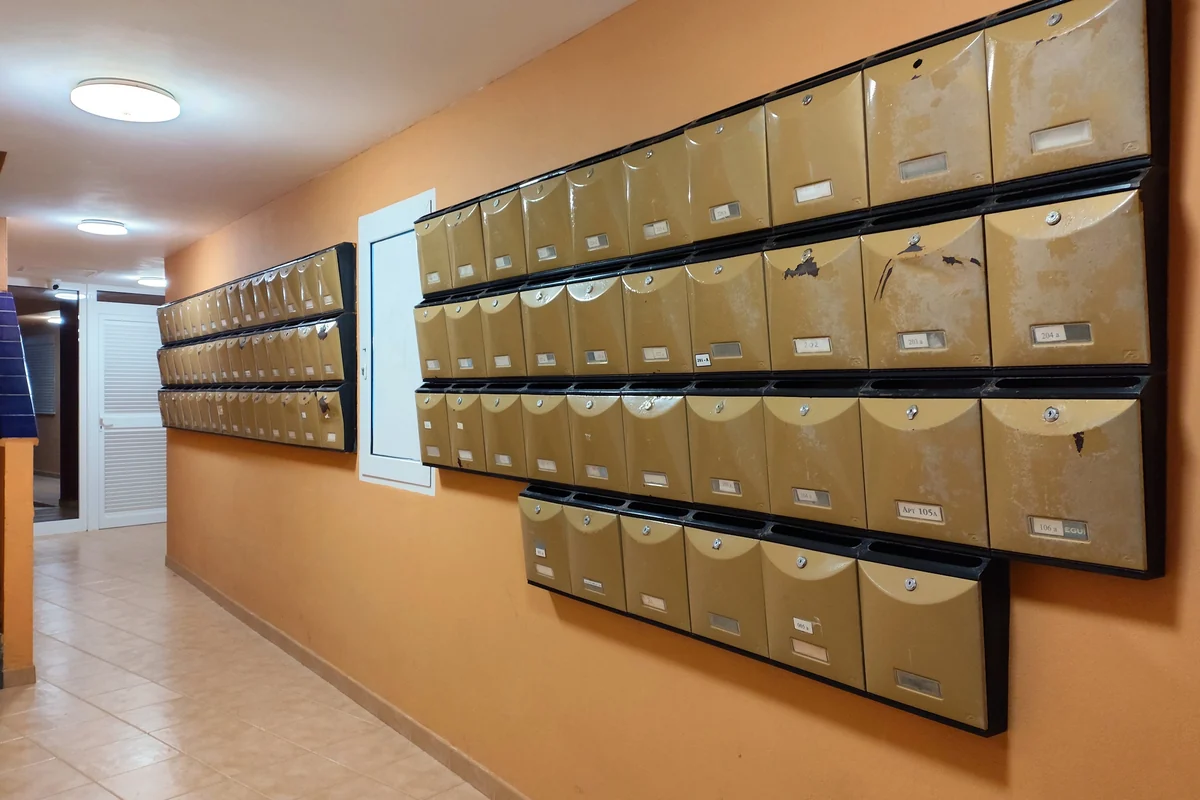
- 1. Accepted by Building Staff, Concierge, or Village Security: In condominiums, apartment towers, and gated subdivisions across Metro Manila and major provincial cities, couriers are strictly barred from entering residential corridors. Riders hand packages to the lobby concierge, administration office, or gate security guard, who signs the waybill. If the front desk staff forgets to log the item in their tenant ledger or neglects to text you, tracking shows delivered while you remain unaware.
- 2. Received by an Authorized Household Member or Domestic Staff: In multi-generational Filipino homes, a spouse, parent, sibling, housemate, or household helper frequently answers the door, pays any balance, and places the box inside a bedroom, garage cabinet, or pantry without immediately informing the actual consignee.
- 3. Premature "End-of-Shift" Marking by Delivery Riders: Courier riders operate under demanding daily route delivery quotas and strict dispatch software cutoffs (often 6:00 PM or 7:00 PM). Occasionally, an overextended rider will pre-scan pending packages as "Delivered" while still on their route, intending to physically hand over the box within the next hour or early the following morning. While this practice violates official carrier policy, it occurs frequently in congested urban sectors.
- 4. Delivery to a Similar Neighboring House or Commercial Address: In rural barangays, subdivisions with confusing block and lot numbering, or streets with duplicate house numbers, a rider may inadvertently deliver the package to House No. 14 on 2nd Street instead of House No. 14 on 3rd Street, handing the parcel to a neighbor who shares a similar surname.
- 5. Legitimate Carrier Misdelivery to an Unrelated Third Party: In true logistics error cases, the rider delivers the box to a completely wrong street or hands the parcel to an unauthorized stranger who falsely claims to represent the household. This scenario requires immediate carrier tracer intervention.
Immediate 30-Minute Physical Perimeter Audit
Before calling hotlines or filing formal disputes, conduct a rapid, thorough physical check of your immediate premises. Performing these four physical checks resolves the overwhelming majority of delivery discrepancies:
Audit All Building Drop-Off Touchpoints
If you reside in a condominium or gated community, visit the building reception desk, mail room, guardhouse, and property management office in person. Ask staff to inspect physical package cages and logbooks for entries under your unit number or family name.
Question Household Members and Helpers Directly
Ask everyone residing in your home—including housemates, parents, children, and domestic helpers—whether they received or signed for a package earlier today. Inquire whether a courier called out at the gate while you were asleep or in the shower.
Check Exterior Residential Concealment Areas
Riders sometimes tuck prepaid pouches behind carport plant pots, on top of outdoor electrical meter boxes, inside perimeter mail slots, or behind decorative gate posts to protect them from passing street view or sudden rain.
Inquire with Immediate Left and Right Neighbors
Check with your immediate neighbors or adjacent sari-sari store owners. Helpful neighbors routinely accept deliveries on behalf of absent friends to prevent parcels from being returned to the delivery hub.
How to Request and Audit the Official LBC Proof of Delivery (POD)

To obtain a copy of the official POD, contact LBC Customer Care via their central telephone hotline at (02) 8858-5999, message their verified Facebook Messenger channel (@lbcexpress), or visit your nearest local branch. Quote your 12-digit waybill number and state: "Tracking indicates my parcel was delivered at [Time], but I have not received it. Please provide the digital Proof of Delivery showing the signed recipient name and timestamp."
Once you receive the POD image, compare the recorded data against your household. If the signature matches a family member or building guard, your mystery is solved. If the signature is a generic squiggle or the printed name is completely alien to your household and neighborhood, you possess concrete evidence of courier misdelivery.
- Electronic Signature Capture: The digitized physical signature scrawled onto the courier's screen.
- Printed Name of Recipient: The exact full name typed or written into the terminal acknowledgment line.
- Exact Handover Timestamp: The precise calendar date, hour, minute, and second the transaction closed.
- Assigned Courier / Rider ID: The numerical employee code identifying the specific courier responsible for the route.
- GPS Coordinate Stamp (Where Equipped): The latitude and longitude recorded by the delivery application at the exact moment the terminal was signed.
| POD Data Element | Legitimate Third-Party Acceptance | Probable Courier Misdelivery / Fraud |
|---|---|---|
| Recipient Name | Recognizable family member, helper, or building security guard | Completely unknown name, fictitious initials, or left blank |
| Signature Graphic | Distinctive signature verifiable by household resident | Straight line, single checkmark, or obvious forged squiggle |
| Delivery Timestamp | Matches hours when residents or guard was stationed | Late night (e.g., 9:30 PM) or hours after office building closed |
| Rider Contact Status | Rider confirms specific house gate color and recipient description | Rider unreachable or cannot describe delivery location |
| Physical Package State | Located in building storage or with neighbor upon inquiry | Unlocatable across entire neighborhood or compound |
Step-by-Step Escalation Protocol with LBC Customer Care
When the Proof of Delivery confirms that your parcel was handed to an unauthorized party or the signature is fraudulent, escalate immediately through official carrier channels. Do not wait for the courier to self-correct.
Follow this formal five-step escalation pathway:
Document Complete Tracking Screenshots
Capture high-resolution screenshots of the complete tracking history, including the "Out for Delivery" timestamp, the "Delivered" scan, and any automated dispatch SMS notifications received on your mobile phone.
Contact LBC Customer Care to File a Formal Incident Tracer
Call (02) 8858-5999 or submit an online inquiry. Demand the creation of a formal "Delivery Dispute Tracer Ticket." Record the customer service representative's name and the exact alphanumeric Incident Reference Ticket Number.
Mandate Delivery Hub Dispatch Supervisor Contact
Instruct customer care to alert the Dispatch Supervisor at the specific local delivery hub servicing your barangay. The supervisor must physically summon the assigned rider and review the rider's route manifest.
Allow the 24-Hour Rider Retrieval Window
In genuine misdelivery cases, the hub supervisor dispatches the rider back to the misdelivered address to retrieve the package from the mistaken recipient and execute proper handover to your residence.
Escalate to Formal Loss & Indemnification Claim
If the courier cannot retrieve the package within 48 to 72 hours, require the hub supervisor to issue an official "Lost / Misdelivered Parcel Declaration" to initiate financial reimbursement.
Marketplace Orders (Shopee, Lazada, TikTok Shop) vs. Personal Padala
How you pursue financial recovery depends critically on whether the shipment was an e-commerce platform purchase or an independent personal shipment:
E-Commerce Marketplace Orders (Shopee, Lazada, TikTok)
If the missing delivery was purchased through an online marketplace app where LBC served as the assigned logistics partner, do not rely solely on LBC customer support. Marketplace platform software features an automated escrow timer that automatically releases payment to the seller within 2 to 3 days of a "Delivered" status update.
Open your shopping app immediately, navigate to the specific order, and tap "Return/Refund". Select the reason "Did Not Receive Order". Upload your tracking screenshot and an affidavit statement confirming that you did not receive the goods. Filing this dispute freezes the transaction escrow, protecting your money while the platform's logistics team investigates with LBC.
Independent Personal Shipments (Direct Branch Padala)
For direct consumer shipments tendered at an LBC branch counter, the contractual relationship exists strictly between the registered sender and LBC Express under the terms printed on the reverse of the official receipt. Under Philippine contract law, the registered sender must formally file the claim for lost or misdelivered cargo.
The sender must present the original counter receipt, a copy of the waybill, commercial value evidence (invoices or purchase receipts), and valid government photo identification at the originating branch to process carrier indemnity.
Filing for Compensation: Valuation Limits & Regulatory Escalation
When an LBC tracer confirms that a package was irretrievably lost or delivered to an untraceable third party, the carrier must indemnify the customer pursuant to the declared value indicated on the waybill:
1. Basic Declared Value Coverage: Every standard retail LBC transaction includes basic carrier liability coverage (typically up to PHP 500 for document pouches and basic small parcels). If the sender did not declare a higher commercial value at counter intake, carrier indemnification is legally capped at this statutory baseline.
2. Voluntary Valuation Insurance: If the sender paid the optional ad valorem valuation fee during branch booking (typically 1% of declared value above PHP 500), LBC is legally obligated to reimburse the full declared amount up to the policy ceiling upon presentation of valid commercial invoices.
3. Regulatory Escalation to DTI: If LBC denies liability, claims the package was delivered without providing legitimate POD proof, or refuses to reimburse declared value within standard processing timelines, file a formal complaint with the Department of Trade and Industry (DTI) Fair Trade Enforcement Bureau (FTEB) or DTI Regional Consumer Welfare Desk. DTI mediation routinely compels couriers to present rigorous electronic proof or settle claims promptly.
Submit a formal mediation complaint through the official DTI Consumer Complaints portal (consumercare@dti.gov.ph) or call the 1-DTI (1-384) consumer hotline. Attach your LBC waybill number, tracking screenshots, customer care ticket logs, and commercial purchase invoices.