The Delivery Reality: Can Someone Else Accept Your LBC Package?
In modern daily life, very few people have the luxury of waiting at home all day for a courier van to arrive. Between professional work hours, university classes, family commutes, and daily errands, it is entirely normal to be away from your residence when an LBC delivery rider reaches your front gate.
The first question anxious buyers and recipients ask is: Can someone else legally receive my LBC package for me?
The answer is an unequivocal YES. Standard domestic courier deliveries in the Philippines do not require the registered consignee to be physically standing on the front porch. As long as an adult member of the household or an authorized proxy is available at the address, the courier can complete the physical handover and obtain a valid proof of delivery signature.
Authorized individuals who can legally accept parcels on your behalf include:
- Immediate Family Members: Your spouse, parents, siblings, or adult children living at the same residential address.
- Household Staff and Roommates: Domestic helpers, house caretakers, or condominium roommates present at the property.
- Building and Community Security Personnel: Condominium front desk concierges, building property managers, or subdivision guardhouse security officers (provided prior endorsement was submitted).
- Workplace Colleagues and Receptionists: Front desk receptionists, administrative mailroom staff, or department co-workers for packages addressed to a business office.
Certain high-security shipments carry mandatory "Consignee-Only" endorsements from the sender. These typically include bank-issued credit/debit replacement cards, government biometric passports and visa packets (VCargo), legal court notices, and high-value insured luxury electronics. For these specific items, couriers are legally bound to hand the parcel strictly to the named recipient with original ID verification. Household proxies cannot accept Consignee-Only consignments.
Document Requirements: Authorization Letters and Valid Government IDs

To comply with the Data Privacy Act of 2012 (Republic Act No. 10173) and protect consumers against package theft and identity fraud, courier riders follow standardized verification protocols before releasing parcels to secondary claimants.
For standard e-commerce orders of nominal value, a rider delivering to a private residence may simply ask the household member to sign their handheld terminal with their name and relationship to the consignee. However, for valuable merchandise, electronics, or formal courier deliveries, the representative must present The Three Mandatory Verification Documents:
Signed Authorization Letter from the Consignee
A physical written or printed note signed by the registered recipient explicitly naming the authorized proxy, stating the 12-digit waybill number, and authorizing them to receive and sign for the package.
Photocopy or Digital Image of Consignee's Valid Photo ID
A legible photocopy (or clear smartphone image) of the primary recipient's valid government-issued identification card, clearly showing their photo, full legal name, and signature.
Original Valid Government ID of the Receiving Representative
The authorized proxy must physically present one original government-issued photo ID to the courier for visual verification and signature matching on the electronic delivery manifest.
| Identification Document Category | Issuing Government Agency | Verification Reliability Level |
|---|---|---|
| Philippine National ID (PhilID / ePhilID) | Philippine Statistics Authority (PSA) | Primary Official Identification |
| Philippine Passport | Department of Foreign Affairs (DFA) | Primary Official Identification |
| Driver's License | Land Transportation Office (LTO) | Primary Official Identification |
| Unified Multi-Purpose ID (UMID) | SSS / GSIS | Primary Official Identification |
| Social Security System (SSS) ID Card | Social Security System (SSS) | Primary Official Identification |
| Professional Regulation Commission (PRC) ID | Professional Regulation Commission | Primary Official Identification |
| Postal ID (Digitized / Biometric) | Philippine Postal Corporation (PHLPost) | Primary Official Identification |
| Voter's ID / Comelec Voter Certification | Commission on Elections (COMELEC) | Secondary Official Identification |
| Senior Citizen ID / PWD ID Card | Local Government Unit (OSCA / PDAO) | Secondary Official Identification |
| Company ID / Student School ID | Registered Employer / Accredited University | Secondary ID (Accepted with Barangay Clearance) |
Cash on Delivery (COD) Rules When the Consignee Is Away
Cash on Delivery transactions represent a substantial portion of domestic Philippine e-commerce, but they introduce an absolute financial condition: No Payment, No Handover. Couriers are personally liable for COD remittance shortages and cannot extend credit or leave parcels with promises of subsequent bank transfers.
If you anticipate being away during a COD delivery, implement these essential payment rules:
- Leave the Exact Peso Amount in an Envelope: Prepare the exact cash amount due—including the item price and any declared shipping fee—in a sealed envelope marked with the representative's name and waybill number. Couriers rarely carry large amounts of cash change in their pouches due to safety and robbery risks.
- Inform Your Household Proxy in Advance: Do not assume a family member will automatically front the money for your online shopping order. Inform them of the exact expected cost, the seller's name, and the items inside.
- Digital QR Payments at the Doorstep: While some delivery couriers carry personal GCash or Maya QR codes to accept electronic payment transfers at the doorstep, this is not guaranteed policy. Network dead zones or cellular data delays can prevent the payment confirmation SMS from reaching the rider's device, forcing them to abort the handover. Physical cash remains the most dependable option.
What Happens If NO ONE Is Home? (The Unattended House Protocol)
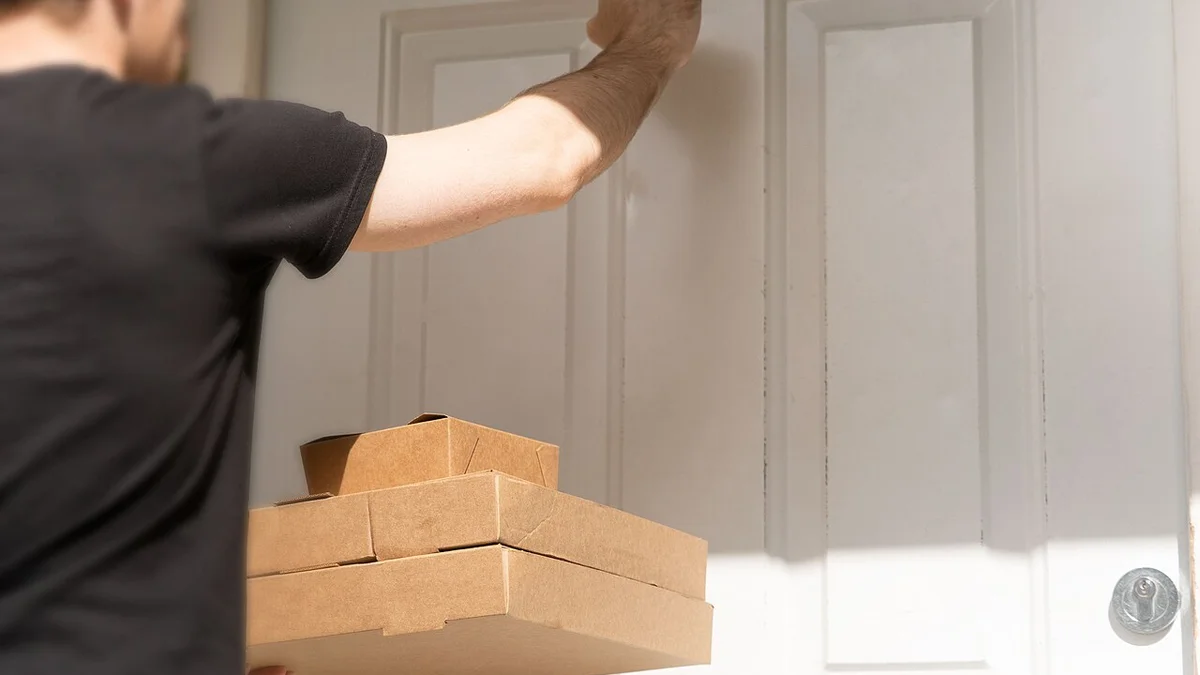
If the courier arrives at your address, knocks on the door, rings the gate bell, dials your mobile phone, and discovers that nobody is home and no authorized proxy is accessible, what happens next?
In many Western nations (such as the United States or United Kingdom), delivery drivers routinely practice "doorstep dropping"—leaving cardboard boxes on front porches, doorsteps, or garage driveways without obtaining a signature. In the Philippines, couriers NEVER leave packages unattended on doorsteps.
Due to tropical afternoon downpours, street accessibility, and theft risks, leaving an unattended parcel is a direct violation of courier security standards. Here is the exact sequence of events that unfolds:
Rider Logs Disposition Scan
The courier selects the status code "Delivery Attempt Failed - Consignee Unavailable" on their handheld scanner. The system records the GPS coordinates and timestamp of the attempt.
Automated SMS Notification
An automated SMS text alert is generated by LBC's dispatch gateway and transmitted to both the sender and consignee, informing them that a delivery attempt was made.
Secure Hub Return
The parcel remains secured inside the vehicle's cargo box until the courier returns to the servicing delivery hub in the evening, where it is checked into the locked warehouse cage.
Automatic Next-Day Re-Attempt
The parcel is automatically scheduled for a second delivery attempt on the next operational business day (or Monday, if the first attempt took place on Saturday). You do not need to pay extra fees.
Intercepting the Delivery: How to Redirect to an LBC Branch for Self-Pickup
If you realize that you will be away from home for several consecutive days—such as during an out-of-town business trip, family vacation, or medical procedure—allowing repeated delivery attempts to fail will eventually trigger a Return to Sender (RTS) cancellation.
You can intercept this process by converting your shipment to "Hold for Branch Pick-Up" (Cash on Pick-Up / COP redirection):
Call LBC Customer Service Hotline
Dial (02) 8858-5999 as soon as the first delivery attempt fails. Have your 12-digit tracking number ready.
Request "Hold for Pick-Up" at a Preferred Branch
Inform the agent that you are unable to receive doorstep deliveries and request the package to be staged at your designated municipal or shopping mall LBC branch.
Wait for the "Received at Branch" Confirmation Scan
The package will be transferred from the delivery hub to the chosen retail branch on the next morning consolidation run. Do not travel to the branch until tracking updates to "Arrived at Servicing Branch".
Claim Your Parcel Within the 5-to-7-Day Window
Visit the branch during regular operating hours with your tracking number, valid government ID, and any COD balance. The branch holds your parcel safely for 5 to 7 calendar days before any return action.
Workplace, School, and Commercial Building Handover Protocols
Having parcels delivered to your workplace, university campus, or commercial office is one of the most effective strategies to prevent missed deliveries. However, commercial buildings enforce formal administrative security rules that differ significantly from residential neighborhoods.
To guarantee smooth parcel handover when you are in meetings or away from your desk:
- Include Complete Internal Address Routing: When booking the shipment, provide your full legal name, company name, floor level, and department name (e.g., "Juan Dela Cruz, 12th Floor, Marketing Dept., Tower 1"). Couriers cannot wander through corporate office floors searching for individuals without department routing.
- Coordinate with Administrative Mailrooms and Reception: In large corporate high-rises, delivery couriers are strictly restricted to the building's ground floor lobby, security reception desk, or central mailroom. File an advance package authorization endorsement with your receptionist or building concierge.
- Establish a Cash Deposit for Workplace COD Deliveries: If your delivery is Cash on Delivery, leave the exact cash balance in a labeled envelope with your building receptionist or a trusted colleague. If reception staff do not hold payment, they will be forced to decline the delivery, resulting in an immediate failed attempt.
- University Campus and Dormitory Deliveries: For students residing in university dormitories, couriers typically drop packages at the campus gatehouse or dormitory administration office. Ensure your student ID number and mobile phone number are clearly noted on the waybill package label.