Why Document Logistics in the Philippines Demands Specialized Packaging
Shipping legal paperwork, official identification, and vital civil registry records across the Philippine archipelago is fundamentally different from shipping commercial retail goods or apparel. If a pair of sneakers or a cotton shirt experiences mild transit moisture or external box crushing, the merchandise is usually unharmed. Conversely, if an original Philippine Statistics Authority (PSA) birth certificate, an authentic Land Title Deed of Sale, an embassy-stamped travel passport, or a notarized commercial contract suffers water intrusion or deep creasing, the legal document can be rendered completely invalid by government agencies and courts.
Document transit in the Philippines faces severe environmental and mechanical hazards. In a tropical maritime climate characterized by sudden torrential monsoonal downpours, high ambient humidity, and inter-island sea transit aboard ferries and barges, moisture is everywhere. Furthermore, during last-mile motorcycle courier delivery, parcels travel inside heavy canvas saddlebags exposed to rain and engine exhaust heat. Without impenetrable internal waterproofing, paper fibers absorb moisture, causing official wet stamps, notary seals, and signatures to blur, bleed, and fade.
Mechanically, document envelopes do not travel in isolation. Inside regional courier sorting hubs and linehaul freight trucks, thin paper envelopes are intermingled with heavy cargo sacks and multi-kilogram boxes. When a 10-kilogram carton rests atop a flexible document mailer, unprotected paper sheets fold, crease, and tear along the edges. Understanding these severe environmental realities highlights why senders must adhere to rigorous physical packaging standards.
While the paper itself has nominal physical value, replacing an authenticated original document—such as an Apostilled university transcript, an overseas employment contract, or a judicial court order—often requires months of bureaucratic processing and thousands of pesos in re-filing fees. Treat every document shipment like fragile high-value freight.
The 3-Layer Protective Barrier Protocol for Critical Paperwork
To ensure critical legal paperwork arrives at its destination in pristine, court-admissible condition, professional legal dispatchers and corporate paralegals follow the 3-Layer Protective Barrier Protocol. This systematic packaging sequence provides comprehensive defense against moisture, bending, edge tearing, and unauthorized physical tampering.
Layer 1: The Waterproof Plastic Sleeve (Moisture Barrier)
Place your paper sheets, passport, or certificates inside a clean, heavy-gauge plastic polyfolder, clear sheet protector, or zip-lock waterproof pouch. Fold the opening and seal it completely with a strip of clear tape. This inner plastic cocoon ensures that even if rainwater breaches outer packaging, the interior paperwork remains bone dry.
Layer 2: Rigid Corrugated Cardboard Sandwich (Crease Defense)
Cut two flat sheets of stiff, double-wall corrugated cardboard slightly larger than your documents (approximately 1 inch wider and longer on all sides). Place your sealed plastic document sleeve between the two cardboard sheets and tape the perimeter edges together. This rigid sandwich prevents the documents from being bent, folded, or punctured by heavy adjacent parcels.
Layer 3: The Heavy-Duty Courier Outer Pouch (Environmental Shield)
Slide the rigid cardboard assembly into an official LBC N-Pack poly mailer pouch (N-Pack Slim or N-Pack Small). The tear-resistant polyethylene outer skin shields the cargo against road grime, dust, and friction during hub sorting transfers.
Tamper-Evident Boundary Signature (Security Verification)
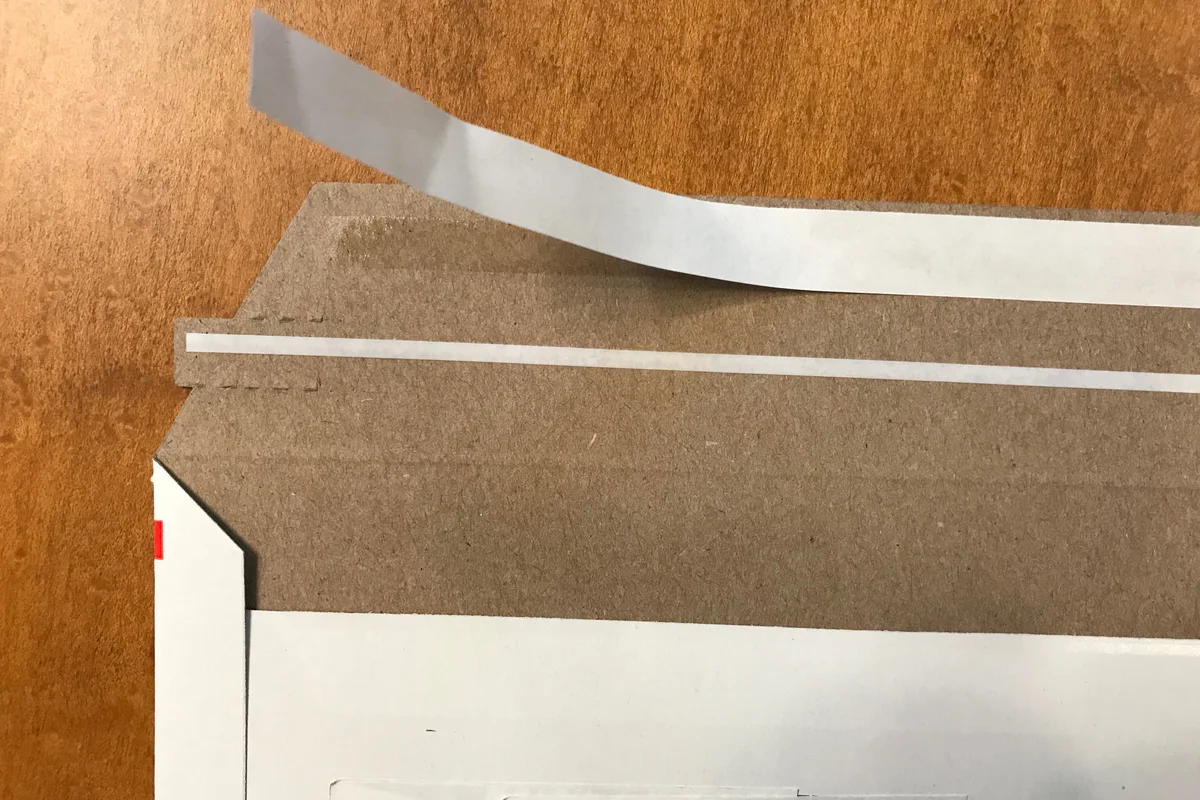
Peel the adhesive release liner and press the pouch sealing flap down firmly. Using a permanent marker or archival pen, write your signature and the tender date directly across the seam where the flap meets the pouch body. If an unauthorized party attempts to open the envelope during transit, the broken signature line provides immediate, undeniable proof of tampering.
LBC Document Packaging Formats: N-Pack Pouches vs. Specialized Envelopes
LBC Express provides specialized retail packaging tiers tailored specifically for document carriage. Selecting the proper format prevents excessive bulk and minimizes shipping expenses while optimizing transit safety.
| Packaging Format | Dimensions | Document Capacity | Recommended Contents | Typical Regional Delivery Tier |
|---|---|---|---|---|
| N-Pack Slim | 6" x 10" (Flat) | Up to 15 standard A4 sheets | Passports, single contracts, birth certificates, IDs | Economical flat document tariff tier |
| N-Pack Small | 9.5" x 14" (Flat) | Up to 50 legal sheets + rigid backing | Notarized deeds, multiple contracts, diplomas, transcripts | Standard small pouch tariff tier |
| N-Pack Medium | 12" x 18" (Flat) | Up to 150 bound sheets | Corporate accounting folios, legal case briefs, thick folders | Medium pouch tariff tier |
| VCargo Consular Envelope | Specialized Embassy Spec | Single passport booklet + consular slips | Consular visa processing (US, UK, Canada, Schengen) | Dedicated consular track tariff |
| Kilobox Slim (Corrugated) | 16" x 10" x 3" | Bound books, heavy binders, framed certificates | Official court case records, framed degrees, multiple ledgers | Boxed cargo weight tariff |
Shipping Passports, Government IDs, and Vital Records Safely
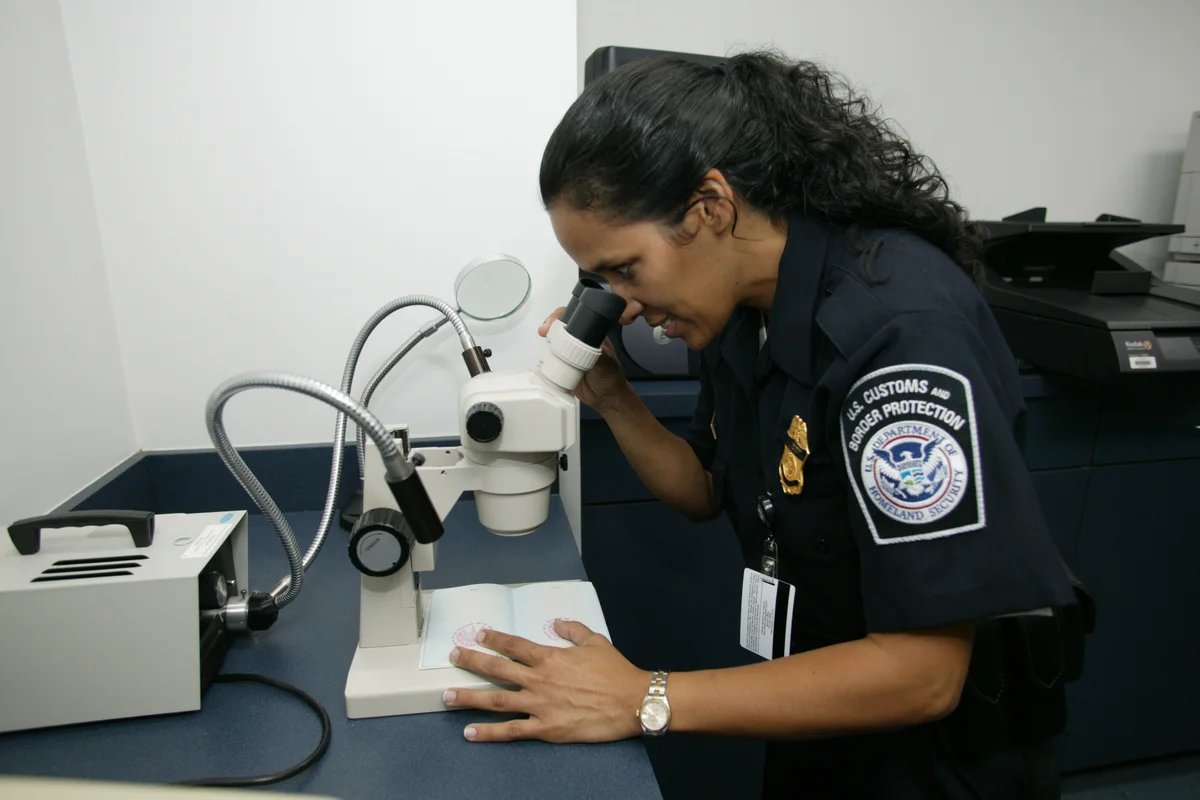
Many customers wonder: "Is it legal and safe to mail my original passport or PRC license through LBC?"
Under Philippine transport regulations and commercial law, shipping original passports, civil registry documents, and government identification credentials via authorized common carriers is fully permitted. In fact, major foreign diplomatic missions (including the United States Embassy in Manila, the Embassy of Canada, and various European consulates) routinely contract LBC Express as their designated courier partner for return passport delivery following visa issuance.
When shipping critical identity credentials or irreplaceable legal paperwork, observe these five indispensable security rules:
- Make Clear Color Scans Before Dispatch: Before packing an original passport, birth certificate, or land title, make high-resolution front-and-back digital color scans of every page and store them securely on Google Drive, iCloud, or a flash drive. If an extreme force majeure event occurs in transit, digital scans substantially expedite government re-issuance and legal affidavits of loss.
- Do Not Include Prohibited Enclosures: Never insert cash, bank checks, uncancelled postage stamps, or jewelry inside document envelopes. Tellers physically check document contents at the counter; finding cash or unmanifested checks will result in immediate shipment rejection under anti-money laundering and postal safety rules.
- Declare Adequate Valuation: Standard courier tariff terms limit default document liability to approximately PHP 500. While a passport or birth certificate has no commercial resale value, replacing an authenticated document incurs substantial administrative expenses, consular fees, and lost travel bookings. Senders should declare a valuation reflecting the true cost of replacement (e.g., PHP 3,000 to PHP 5,000 for passports, or PHP 10,000+ for complex commercial filings) and pay the minor valuation surcharge.
- Double-Check Consignee Contact Number: Passports and sensitive legal documents will NOT be left unattended at an empty front porch or gate. The delivery rider must contact the recipient by phone to verify presence and inspect government identification before handing over the envelope.
- Verify Consular VCargo Routing: For embassy visa applications and return passport services, confirm whether your diplomatic mission requires the specialized 15-digit VCargo courier tracking format rather than standard 12-digit retail waybills. VCargo pouches receive prioritized, dedicated consular courier handling directly between visa processing centers and regional distribution hubs.
Branch Counter Drop-Off Walkthrough for Confidential Documents
When you arrive at the LBC branch with your prepared document package, follow these specific steps to ensure your confidential paperwork is accepted without friction:
Present the Unsealed Document Sandwich
Keep your outer N-Pack pouch unsealed so the counter associate can verify the contents. Show the teller the sealed inner clear plastic sleeve containing your paperwork. Tellers need to confirm that the package contains paper records and does not conceal paper currency, credit cards, or contraband.
Provide Precise Consignee Location Details
If sending documents to a corporate law firm, corporate headquarters, or government agency (such as PRC, DFA, or SSS), specify the exact Floor Number, Department, and Room Number. Vague addresses like "City Hall, Cebu" cause document envelopes to languish in municipal general mailrooms.
Witness Security Sealing at the Counter
Once the teller completes the visual check and weighs the pouch, have the teller seal the tamper-evident adhesive strip in your presence. Affix your signature across the seal seam using your permanent marker.
Verify the Printed Waybill Sticker and OR Slip
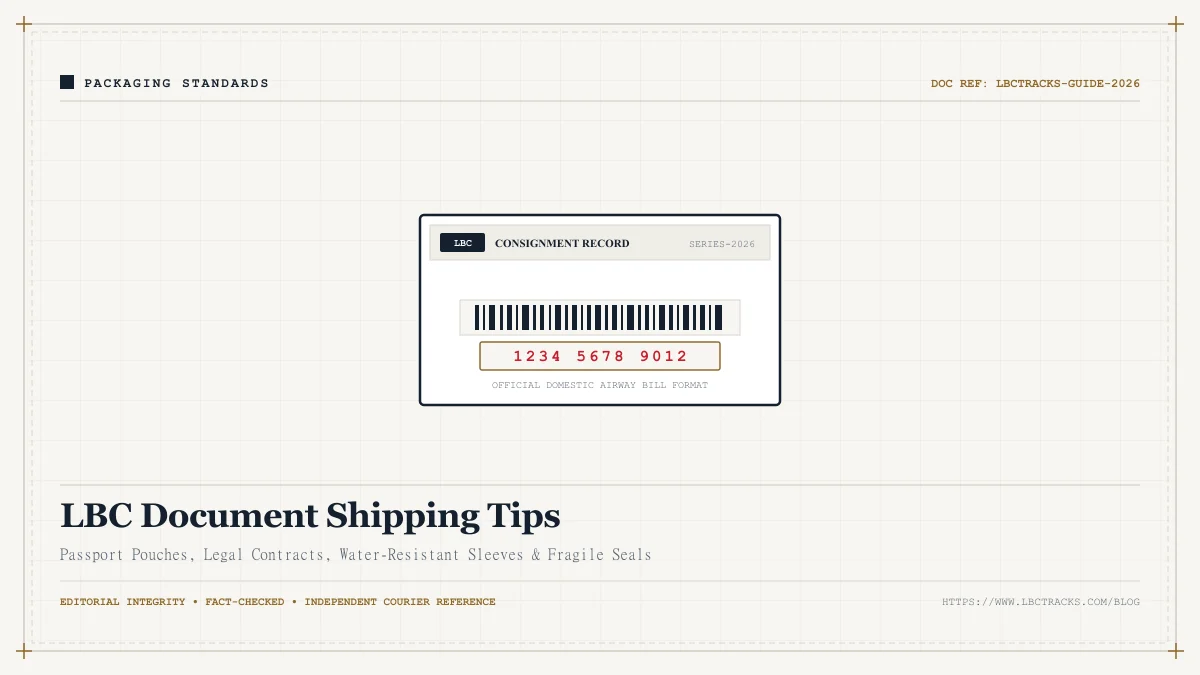
Ensure the thermal waybill sticker generated by the printer is affixed squarely to the front face of the pouch. Examine your printed receipt slip to confirm the 12-digit tracking code and destination city code (e.g., MNL, CEB, DVO) are accurate.
Contingency Procedures: Addressing Delays, Misrouting, or Weather Holds
If your document shipment experiences an unexpected tracking delay or routing exception, prompt action prevents escalated transit complications:
Monitoring Tracking Milestones Online: Use [lbctracks.com](https://www.lbctracks.com/) to monitor transit progress. Look for key scan milestones: "Accepted at Origin Branch", "In Transit to Regional Sorting Hub", "Received at Destination Hub", and "Out for Delivery". If a status remains unchanged for more than 48 hours without explanation, investigate immediately.
Typhoon and Sea Travel Suspensions: The Philippine Coast Guard regularly halts inter-island maritime ferry and cargo vessel operations during storm warning signals (Signal No. 1 or higher). If your document is traveling on an inter-island corridor (e.g., Batangas to Calapan, or Cebu to Ormoc) during a typhoon, tracking may pause while vessels are docked in port for safety. Transit automatically resumes once Coast Guard clearances are reissued.
Initiating Branch-to-Branch Tracing: If tracking displays "Misrouted" or "Returned to Hub", take your printed paper receipt and visit your originating drop-off branch immediately. Branch staff can send an internal telex dispatch to the destination hub manager to halt transit and redirect the envelope to the correct delivery station.