Immediate Action Protocol: What to Do the Moment You Spot Damage
Discovering that a long-awaited package has arrived crushed, waterlogged, torn open, or stripped of its valuable contents is one of the most frustrating experiences in retail shipping. In the heat of the moment, many recipients instinctively unpack the damaged merchandise, throw the torn cardboard box and bubble wrap into the recycling bin, and post an angry message on social media. Doing so, however, inadvertently destroys the vital forensic evidence required to approve an insurance claim.
The foundational rule of courier claims adjudication is simple: the packaging tells the story of the damage. Courier claims adjusters are trained investigators who examine carton compression lines, tape seal breaches, and internal void fill to determine whether damage occurred due to rough conveyor sorting, improper vehicle stacking, or inadequate sender preparation. If you discard the outer box, you forfeit the physical evidence needed to prove carrier mishandling.
The moment you observe exterior creasing, puncture holes, fluid leaks, or rattling broken glass inside a delivery parcel, freeze the process and execute an immediate evidence capture protocol before signing the delivery logbook or releasing the courier rider.
Preserve the outer cardboard box, plastic flyer pouch, tape seals, bubble wrap, foam inserts, and cardboard partitions. LBC claims adjusters may request a physical inspection at the local branch before approving reimbursement.
The 30-Day Contractual Filing Deadline: Understanding Time Limits
Shipping contracts in the Philippines are governed by the terms printed on the reverse of the courier waybill, backed by the Commercial Code and the Civil Code of the Philippines. Under LBC Express Standard Terms and Conditions of Carriage, claims for damaged contents, partial pilferage, or total loss must be filed formally in writing within thirty (30) calendar days from the date of acceptance at the origin branch or the date of delivery.
Failing to initiate your claim within this 30-day statutory window constitutes an operational waiver. Once 30 days elapse, courier databases archive transaction manifests, transit hub surveillance recordings are purged, and the carrier is legally discharged from liability under standard bill of lading contractual terms.
A critical legal distinction exists between patent (visible) damage and latent (concealed) damage:
- Patent (Visible) Exterior Damage: Damage readily visible on the exterior carton, such as severe crushing, forklift punctures, or torn security tape. This must be noted immediately on the delivery manifest upon handover.
- Latent (Concealed) Interior Damage: Situations where the outer box appears intact, but the fragile item inside is fractured upon opening. For concealed damage, recipients must file within 24 to 48 hours of delivery to demonstrate that damage occurred during transit rather than after household receipt.
Photographic and Evidentiary Dossier Standards: The 6-Angle Framework
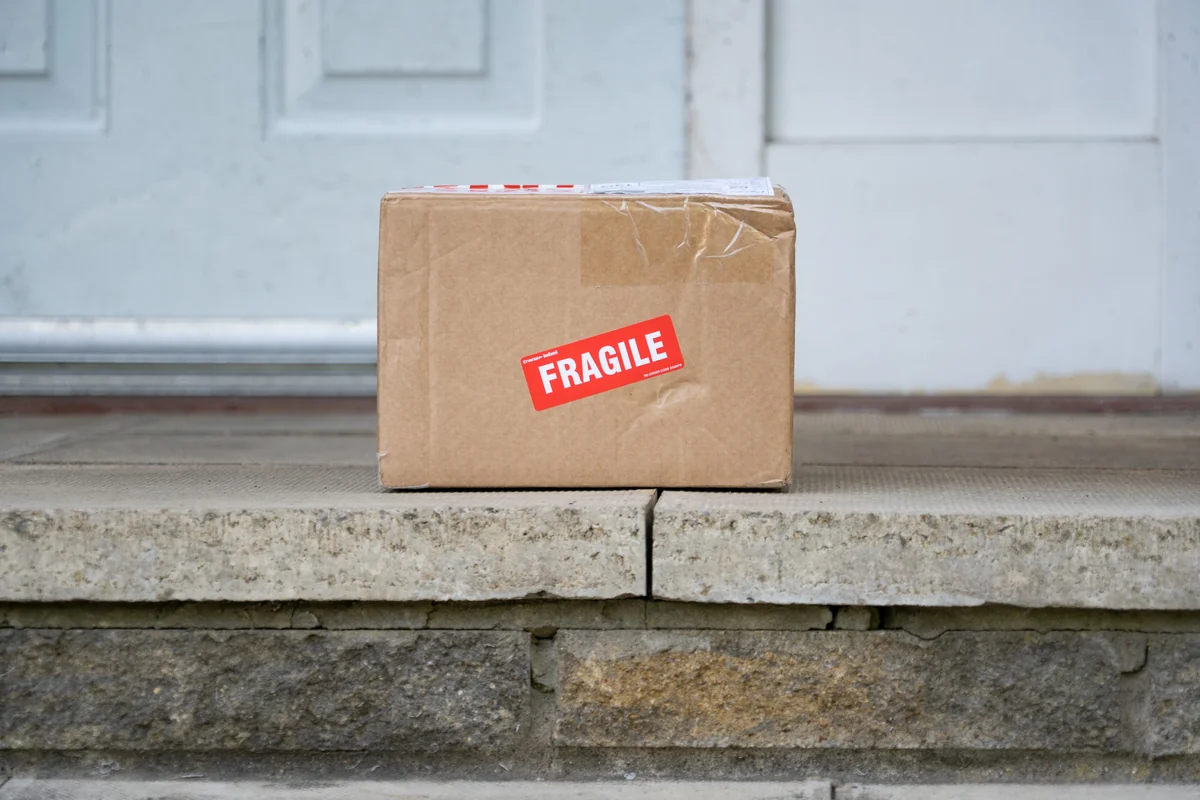
A claim is only as strong as its evidentiary dossier. When a claims manager in LBC's central adjudication department reviews a file, they rely entirely on photographic and video documentation. Fuzzy, poorly lit snapshots taken from arm's length will result in claims rejection or requests for re-inspection.
To build an unassailable claims portfolio, apply the rigorous 6-Angle Photographic Framework:
Capture All Six Exterior Faces of the Outer Carton
Place the box on a flat, well-lit surface. Take clear, straight-on photos of the top, bottom, front, back, left side, and right side. Capture wide shots showing overall carton deformation and close-ups of specific punctures or tears.
Macro Close-Up of the Waybill Label and Barcode
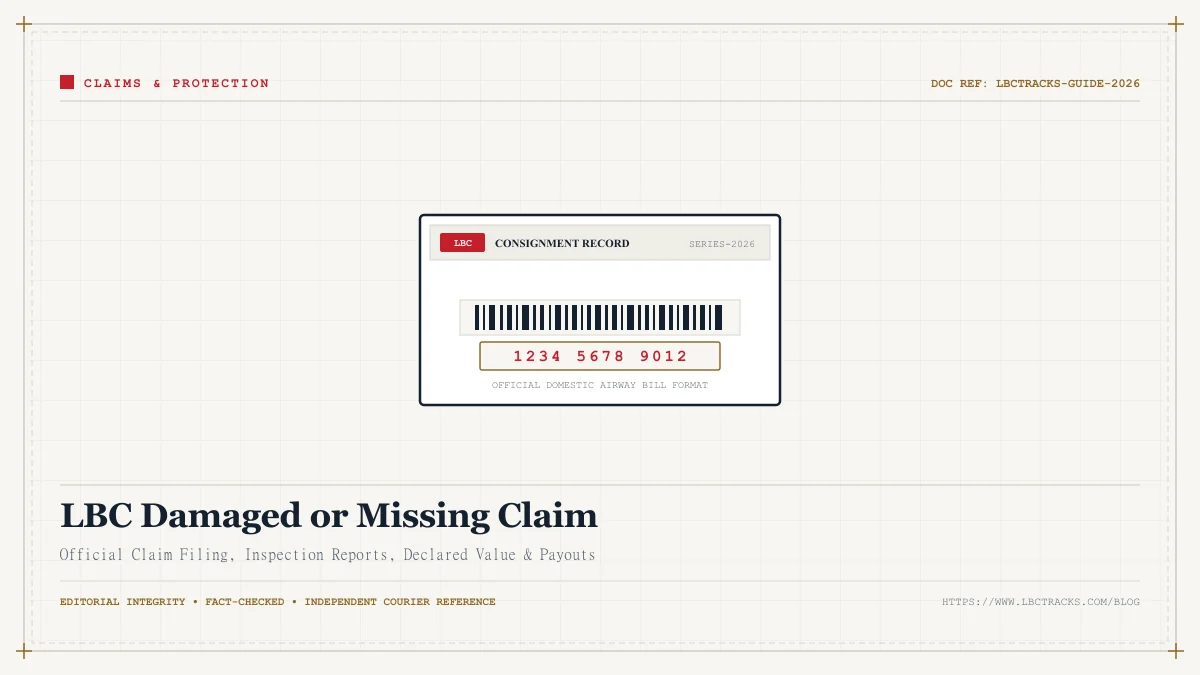
Photograph the adhesive plastic pouch containing the paper waybill. Ensure the 12-digit tracking number, sender details, recipient details, and declared value printouts are sharp and legible.
Document Tape Seals and Security Tapes
Photograph all box seams. Show whether factory tape was slit, re-taped with clear packaging tape, or torn open. If security tamper-evident tape was compromised, take high-resolution macro shots.
Record Internal Cushioning and Void Fill Staging
Open the top flaps without removing internal padding. Photograph how the item was positioned inside. Show the thickness of bubble wrap, presence of corrugated dividers, and void-fill packing peanuts.
Detailed Imagery of Damaged Merchandise
Remove the damaged item carefully. Photograph specific fractures, shattered screens, dented chassis, or severed cables. Ensure brand logos, serial numbers, and model badges are clearly visible.
Continuous Unboxing Video Footage (If Available)
If you recorded an unboxing video upon courier arrival, preserve the raw, unedited MP4 video file. Continuous unboxing footage showing unbroken seals before opening is decisive proof in dispute hearings.
The Bad Order (BO) Report and Counter Intake Documentation
When a shipment exhibits obvious exterior trauma upon arrival, you must never sign the standard delivery manifest as an unqualified acceptance. Signing the delivery rider's handheld terminal or paper receipt without qualification legally affirms that you received the package in "Good Order and Condition."
Instead, insist that the delivery rider annotate the delivery sheet with a Bad Order (BO) condition notation. If the delivery occurs at your doorstep, write "Received in Damaged Condition / Box Crushed / Subject to Internal Inspection" next to your signature. Ask the delivery rider to sign or initial next to your notation.
If you are retrieving a damaged package at an LBC retail branch counter, request that the branch teller generate an official Incident Report / Bad Order Slip in the terminal register. The teller inspects the box in your presence, weighs the parcel to verify whether contents were pilfered, and logs an internal condition tag in the tracking database. Request a physical paper copy or take a clear photograph of this report before leaving the counter.
If a delivery rider is in a rush and refuses to wait while you inspect the outer carton, write "Received with Outer Box Damage — Unchecked Internal Contents" prominently across the signature block and take a photo of the signed waybill in the rider's presence.
Declared Value vs. Actual Value: How Reimbursement Is Calculated
The most frequent point of misunderstanding between senders and courier companies centers on the difference between an item's true market value and its contractual Declared Value. Many senders assume that because an item cost PHP 25,000, LBC will automatically write a check for PHP 25,000 if it is destroyed in transit. In reality, courier liability operates under strict contractual limits.
When tendering a shipment at an LBC branch counter, the sender is required to state the "Declared Value" of the goods. For standard retail parcels where the sender pays only base freight, LBC provides automatic basic coverage capped at a statutory minimum—typically PHP 500 for express pouches. If the sender wishes to insure higher-value cargo, they must pay an optional Valuation Charge (typically 1% of the declared amount exceeding the base coverage).
Under Philippine commercial law and common carrier jurisprudence, courier compensation cannot exceed the Declared Value recorded on the original receipt, regardless of whether the owner presents a commercial invoice showing a higher cost. Below is how claims payouts are structured across common scenarios:
| Item Real Value | Declared Value on Receipt | Valuation Fee Paid? | Maximum Carrier Compensation Approved |
|---|---|---|---|
| PHP 15,000 (Smartphone) | PHP 500 (Basic Default) | No (Standard Freight Only) | PHP 500 (Capped strictly at declared base limit) |
| PHP 15,000 (Smartphone) | PHP 15,000 (Full Declaration) | Yes (1% Valuation Fee Paid: PHP 150) | PHP 15,000 (Full replacement value reimbursed) |
| PHP 30,000 (Laptop) | PHP 10,000 (Partial Declaration) | Yes (Partial Fee Paid: PHP 100) | PHP 10,000 (Reimbursement capped at declared ceiling) |
| PHP 8,000 (Ceramic Set) | PHP 8,000 (Declared) | Yes (Valuation Fee Paid) | Pro-rated settlement based on salvageable pieces or total breakage |
Required Claims Documentation Dossier Checklist

When you are ready to file your claim, assemble all supporting documents into a comprehensive physical and digital dossier. Missing a single required item will cause claims adjudicators to put your file on administrative hold. Ensure your submission contains every item on this checklist:
- 1. Completed Official LBC Claim Form: Available at any LBC branch counter or provided by Customer Care via email. Detail the exact narrative of what was damaged, the date received, and the specific compensation requested.
- 2. Original Transaction Receipt / Waybill Copy: The physical white or yellow customer copy of the shipping slip showing the 12-digit tracking number, date of drop-off, freight fee paid, and declared value.
- 3. Commercial Sales Invoice or Official Receipt (OR): Bureau of Internal Revenue (BIR) registered sales invoice, official retail store receipt, or verified e-commerce purchase summary (Shopee, Lazada, or brand website order confirmation) establishing exact purchase cost.
- 4. High-Resolution Photographic Proof: Printed color photos or a digital flash drive containing the complete 6-angle packaging and merchandise imagery.
- 5. Two Valid Philippine Government Photo IDs: Clear photocopies of two valid government-issued photo IDs of the claimant (Passport, Driver's License, UMID, Postal ID, or PhilSys National ID) with active signatures.
- 6. Repair Quotation or Salvage Assessment (If Applicable): For repairable electronics or machinery, an official repair estimate from an authorized service center indicating repair cost versus total replacement.
Carrier Liability Standards Under Philippine Law: Civil Code RA 386
Consumer rights in the Philippine freight and logistics sector are anchored in Title VIII of the Civil Code of the Philippines (Republic Act No. 386), governing Common Carriers. Understanding these legal provisions empowers senders and recipients when communicating with courier dispute adjusters.
Under Article 1733 of the Civil Code, common carriers are bound to observe extraordinary diligence in the vigilance over goods transported by them. Furthermore, under Article 1735, if goods are lost, destroyed, or deteriorated during transit, the common carrier is presumed to have been at fault or to have acted negligently, unless the carrier proves that the loss was due to an extraordinary fortuitous event (force majeure) or inherent defect of the goods.
However, carriers frequently cite Article 1734 defenses—specifically that damage was caused by the "character of the goods or defects in the packing or in the containers." If a sender ships fragile glassware in a single-wall cardboard box with zero bubble wrap, the carrier will reject the claim on the grounds of improper shipper packaging. If the sender packaged the goods according to established industry cushioning standards (double-boxing, minimum two inches of bubble wrap, rigid void fill), the carrier's presumption of negligence stands.
If a claimant and LBC reach an impasse where carrier adjusters dispute packaging integrity despite photographic compliance, consumers are not left without recourse. Under Republic Act No. 7394 (The Consumer Act of the Philippines), the Department of Trade and Industry (DTI) Fair Trade Enforcement Bureau (FTEB) operates an administrative mediation and adjudication division. Claimants can submit their case docket online via the DTI Consumer Complaints portal, where government mediators convene a formal mediation conference between LBC legal representatives and the consumer to negotiate an equitable resolution.
Claims Adjudication Timeline, Salvage Rights & Settlement Disbursement
Once your complete claims dossier is received by LBC Customer Care or the originating branch supervisor, the file is routed to the Claims Investigation Division. A critical aspect of final settlement is the legal principle of salvage value: if LBC pays full replacement value for an item, the carrier legally retains the right to take possession of the damaged goods as salvage. If the claimant wishes to keep the damaged item for parts or independent repair, the claims adjuster will negotiate a partial settlement subtracting estimated salvage value.
The adjudication workflow proceeds through structured investigative checkpoints:
Dossier Audit & Incident Verification (Days 1–5)
Claims examiners audit submitted receipts, verify declared valuation, and check tracking database logs for Bad Order notations recorded by hub sorters or delivery riders.
Transit Hub Cross-Examination (Days 6–15)
The claims department queries intermediate exchange hubs, regional transfer depots, and line-haul vehicle manifests to pinpoint where physical trauma occurred.
Adjudication Decision & Settlement Letter (Days 16–25)
LBC issues an official written Notice of Settlement Approval or Denial. If approved, the letter states the exact approved compensation amount and payment collection instructions.
Compensation Disbursement (Days 26–30)
Settlement funds are disbursed to the claimant via manager's check payable at the designated branch counter, direct bank deposit, or electronic GCash/Maya remittance.