Executive Overview: How Doorstep Courier Collection Operates
Scheduling an LBC Express home pickup eliminates the time spent traveling to a retail counter, finding commercial parking, and standing in branch customer queues with bulky freight. Designed for individual online senders, busy professionals, and home-based e-commerce merchants, doorstep collection brings the courier intake counter directly to your residential gate, office reception, or warehouse loading bay.
Under standard Philippine logistics practice and common carrier regulations, the home pickup workflow functions as an on-demand route booking. Senders submit an electronic pickup request through official LBC digital channels, furnishing complete sender location coordinates, package specifications, and consignee delivery details. The dispatch system logs the request and assigns the pickup task to a neighborhood route rider operating a delivery motorcycle or light commercial collection van.
When the courier arrives, they perform on-site intake verification. This involves checking declared item contents against air cargo safety prohibitions, verifying gross and dimensional parcel weights using portable scales, sealing the packaging with official courier tape, and generating an active 12-digit waybill tracking barcode. Once handed over, the parcel enters the standard LBC sorting network and follows standard regional transit timetables toward the destination address or holding branch.
Below is an executive comparative matrix highlighting the core operational differences between scheduling a home pickup and visiting a retail branch counter:
| Operational Attribute | Doorstep Home Pickup | Retail Branch Drop-Off | Sender Impact & Recommendation |
|---|---|---|---|
| Booking Channel | Official online booking portal, mobile application, or customer service hotline | Walk-in intake counter at over 1,500 retail branches nationwide | Home pickup requires advance digital booking; branch drop-off allows immediate walk-in tendering |
| Scheduling Window | Requires scheduling in advance (typically next-day or scheduled route dates) | Available during posted branch operating hours (street branches or mall schedules) | Use branch drop-off for immediate same-day line-haul dispatch before branch cut-off times |
| Parcel Packaging | Boxes must remain completely unsealed for doorstep open-box visual inspection | Boxes brought unsealed to branch counter for teller inspection prior to taping | Both methods legally require open-box inspection; never pre-seal boxes with personal tape |
| Weight Verification | Rider uses portable digital hanging scales and tape measures at your doorstep | Stationary digital platform scales and counter measuring devices | Freight is billed on the higher of actual gross weight or volumetric dimensional weight |
| Payment Settlement | Cash upon pickup, prepaid online payment, or corporate shipper billing account | Cash, GCash QR, Maya QR, and debit/credit payment cards at point-of-sale | Prepare exact physical cash for rider collection to avoid change delays on the route |
| Best Suited For | Multiple parcel batches, bulky home goods, busy professionals, and home businesses | Urgent same-day express shipments, small document pouches, and remote barangay senders | Evaluate personal schedule and parcel size when choosing the optimal dispatch channel |
Service Availability and Territorial Coverage Verification
While LBC Express maintains delivery coverage reaching virtually every city and municipality across the Philippine archipelago, doorstep collection operates on distinct territorial capacity constraints. Courier dispatch hubs allocate pickup riders primarily across high-density urban areas, commercial zones, and accessible suburban residential communities.
Standard doorstep collection is consistently available throughout the National Capital Region (Metro Manila) and surrounding provincial urban corridors, including Cavite, Laguna, Batangas, Rizal, and Bulacan. Similarly, key metropolitan areas in the Visayas and Mindanao—such as Metro Cebu, Mandaue, Lapu-Lapu, Iloilo City, Bacolod, Davao City, and Cagayan de Oro—maintain active pickup fleets. In these core urban zones, daily motorcycle riders handle smaller pouches and boxes, while dedicated light utility vans collect multi-carton freight and heavy cargo.
Conversely, in remote provincial municipalities, mountainous barangays, and outlying island territories, door-to-door pickup may be unavailable, restricted to designated business days, or subject to minimum parcel volume thresholds. Route accessibility is determined by road infrastructure, courier motorcycle safety, and local hub logistics capacity. Senders in remote areas where doorstep collection is not offered must bring parcels to the nearest official LBC retail branch.
Courier riders operate on tight neighborhood delivery schedules. If you reside in a gated private subdivision or a high-rise condominium with strict security protocols, notify your building reception or gate security guard that a courier pickup is scheduled. Ensure your mobile phone remains active, as riders who are denied entry at the gate or cannot reach the sender by phone within 5 to 10 minutes must proceed to subsequent route stops to avoid delaying other consignments.
Step-by-Step Guide: Booking a Doorstep Pickup Through Official Channels
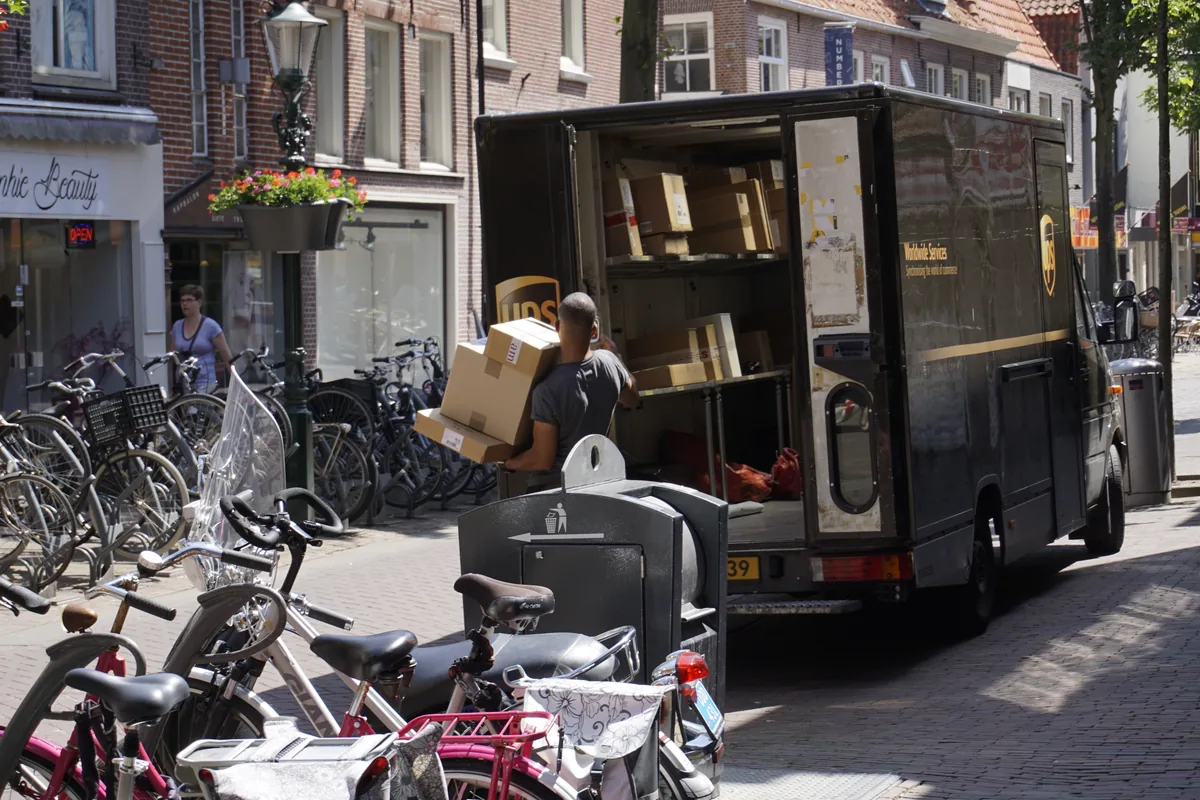
Booking a home pickup requires entering precise routing metadata. Supplying clear address details and accurate package descriptions prevents dispatch confusion and ensures the courier assigns the correct vehicle type—whether a motorcycle equipped with insulated cargo saddlebags or a utility van with spacious cargo decking.
Follow this systematic procedural workflow when reserving a doorstep collection:
Access the Official LBC Online Booking Portal or Mobile App
Navigate to the official LBC Express website at lbcexpress.com or open the verified LBC mobile application on your iOS or Android device. Never submit shipping bookings, personal contact details, or payment card credentials through unverified third-party websites or informal social media direct messages.
Enter Complete Sender Address Coordinates and Landmark Details
Specify your complete physical location: room/unit number, building name, house/lot number, street name, barangay, and city/municipality. Always add a prominent local landmark (such as a nearby barangay hall, school, chapel, or commercial corner) and specific navigation tips to help the dispatched rider locate your residence quickly.
Specify Consignee Destination and Delivery Service Preference
Input the recipient's full legal name, active Philippine mobile number, and destination address. Indicate whether the consignment is intended for direct door-to-door residential delivery or branch counter pickup (Cash on Pick-Up or branch holding).
Declare Package Count, Item Descriptions, and Accurate Valuation
Detail the number of cartons or pouches, item category (such as dry apparel, non-perishable packaged goods, or electronic accessories), and fair commercial replacement value. Accurate valuation ensures appropriate carriage liability coverage and determines applicable ad valorem insurance surcharges.
Select Your Preferred Pickup Date and Record the Reference Number
Choose your desired pickup date from the calendar selector based on local cutoff availability. Once confirmed, the system generates an official Booking Reference Number. Save a screenshot of this reference code, as it serves as your primary identifier when coordinating with the arriving rider or following up with customer care.
Preparing Your Package: Packaging, Labeling, and Open-Box Inspection Rules

One of the most critical aspects of home pickup preparation is understanding packaging and safety compliance. Many first-time senders mistakenly prepare their shipments by wrapping boxes in layers of heavy adhesive tape and decorative paper before the rider arrives. Doing so creates significant friction at the doorstep because couriers are strictly prohibited by aviation security and transport regulations from accepting pre-sealed parcels.
Under Civil Aviation Authority of the Philippines (CAAP) air cargo security rules and standard common carrier guidelines, logistics personnel must visually inspect the interior contents of all non-document consignments. This mandatory physical inspection ensures that packages do not contain dangerous goods, flammable chemicals, combustible batteries, illegal narcotics, or undeclared contraband that could endanger transport aircraft, delivery vehicles, or courier personnel.
To ensure a seamless doorstep intake, follow these core packaging standards:
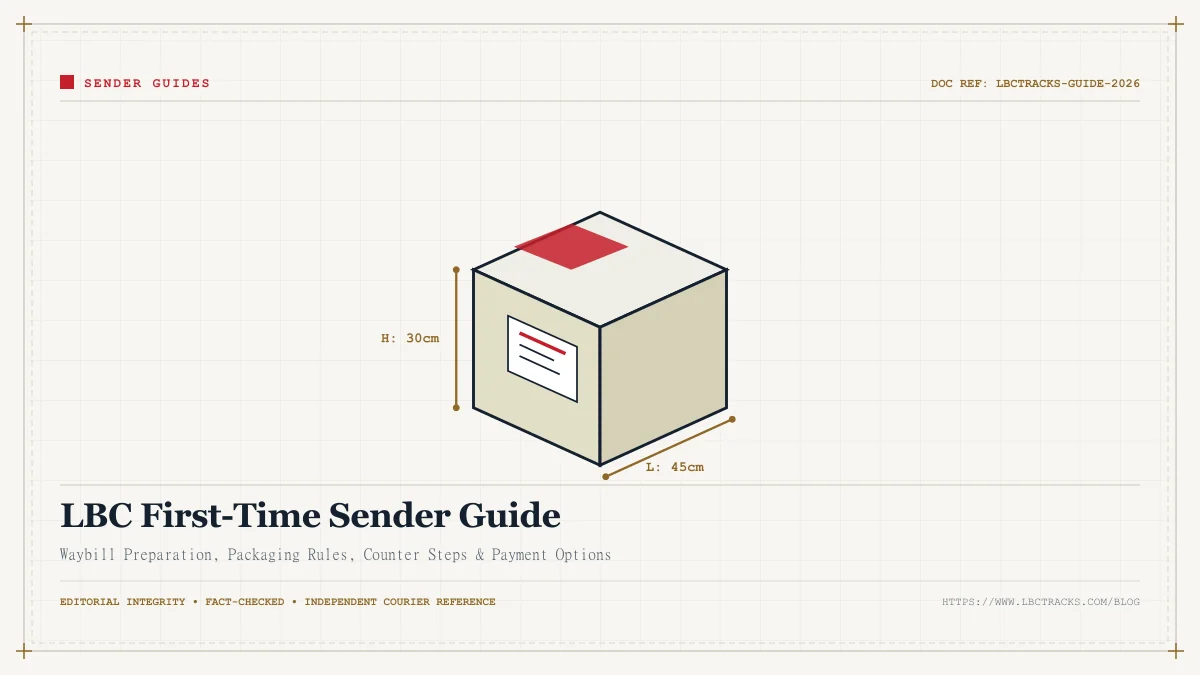
- Leave Carton Flaps Open: Place your items neatly inside a sturdy corrugated cardboard box with protective cushioning, but leave the top flaps unsealed so the visiting courier can perform a rapid 30-second visual inspection.
- Use Adequate Internal Cushioning: Wrap fragile or delicate items individually in multiple layers of bubble wrap, corrugated cardboard inserts, or packing paper. The box must have sufficient internal padding so contents do not shift during inter-island transit.
- Remove Old Barcodes and Labels: If reusing a previously shipped cardboard carton, completely remove or black out any old carrier tracking barcodes, shipping labels, and hazard warning stickers to prevent automated sorting scanner errors at central distribution hubs.
- Prepare Clear Address Information: Write the sender's and recipient's complete legal names, full addresses, and active telephone numbers clearly on a sheet of paper or temporary label affixed to the top of the box. This provides backup documentation if digital waybill records require cross-checking.
Courier riders will refuse parcels containing prohibited or restricted merchandise. Common prohibited items include flammable liquids, aerosol sprays, perfumes with high alcohol content, lithium-ion battery packs not installed inside consumer devices, counterfeit goods, live animals, perishable cooked foods, and unregistered cash currency or precious metals. For a comprehensive list of shipping prohibitions, consult our dedicated LBC Prohibited and Restricted Items Guide.
The Doorstep Handover Experience: Weighing, Rating, and Digital Waybills
When the scheduled pickup date arrives, keep your registered mobile phone within earshot and on loud ringer mode. In most delivery territories, courier riders send a preliminary SMS alert or make a voice call prior to arriving at your neighborhood street to confirm that someone is present at the address.
During the doorstep handover, the courier follows a standardized four-phase intake procedure:
Phase 1: Identity and Booking Verification. You present your Booking Reference Number and confirm the destination city and consignee name. The courier pulls up the assigned dispatch record on their handheld mobile logistics terminal.
Phase 2: Visual Physical Inspection. The courier inspects the unsealed contents to confirm compliance with air cargo safety rules and verify that the declared commodity matches the physical items.
Phase 3: Package Sealing and Security Application. Once verified, the courier closes the carton flaps and seals the package using official reinforced LBC security tape across the center seam and edges, ensuring tamper-evident protection.
Phase 4: Physical Weighing and Volumetric Measurement. The courier suspends the package from a handheld digital scale to record the actual gross weight in kilograms. For bulky cartons, they measure length, width, and height in centimeters using a tape measure to determine the volumetric dimensional weight.
Under domestic Philippine air cargo standards, volumetric weight is calculated using the established industry formula: (Length in cm x Width in cm x Height in cm) / 3,500. Freight charges are assessed on whichever value is higher between actual gross weight and volumetric weight. To learn more about dimensional tariffs and pouch pricing tiers, review our comprehensive LBC Package Size and Weight Guide.
| Billing Component | Assessment Method | Doorstep Settlement Policy | Sender Practical Guidance |
|---|---|---|---|
| Base Freight Tariff | Weight tier and origin-to-destination geographic zone | Calculated in real-time on courier handheld terminal | Pre-calculate estimated shipping rates using published carrier distance brackets |
| Volumetric Dimensional Surcharge | Applied when (L x W x H / 3,500) exceeds actual gross weight | Automatically assessed on bulky or lightweight cartons | Use compact cartons that snugly fit items to avoid paying for excess empty air volume |
| Carriage Insurance (Valuation) | Mandatory percentage assessed on declared commercial value | Added directly to base freight total on intake waybill | Always declare realistic item value; compensation for lost cargo is tied to declared valuation |
| Payment Settlement Method | Cash on pickup, digital wallet QR, or corporate billing | Riders collect physical cash or scan digital QR codes | Prepare exact physical cash; riders maintain minimal change floats to minimize robbery risks |
Handling Delays, Cancellations, Weather Disruptions, and Support Escalation
While courier operations strive to fulfill scheduled pickup appointments on the designated date, external operational challenges can occasionally cause scheduling delays. In urban centers, dense traffic gridlock, sudden tropical downpours, flooded neighborhood streets, or unexpected route volume spikes can prevent a rider from reaching every stop before daily dispatch cutoffs.
If a scheduled pickup is missed or delayed, follow this troubleshooting escalation sequence:
1. Check Booking Status Online: Access the booking portal using your Booking Reference Number. If the status indicates 'Pending Dispatch' or 'Rescheduled,' the route manager may have rolled your request to the next business morning due to weather or volume capacity.
2. Contact Customer Support with Reference Details: If you need urgent status clarification, reach out to official LBC customer care through their telephone hotline or verified social media channels. Provide your Booking Reference Number, registered sender name, and exact address to request route dispatcher follow-up. For step-by-step preparation advice on communicating with support personnel, consult our LBC Customer Support Preparation Guide.
3. Rescheduling or Canceling a Pickup: If your availability changes, you can modify or cancel an unfulfilled booking online through the booking portal before the rider is dispatched. Alternatively, inform the rider when they place their preliminary confirmation call.
4. Evaluating the Branch Drop-Off Alternative: If your shipment is time-sensitive and cannot wait for a rescheduled doorstep visit, the fastest and most dependable alternative is walking into a nearby LBC branch. With over 1,500 company-owned branches across shopping malls, high streets, and transport hubs throughout the Philippines, retail counters accept parcels immediately and dispatch them on scheduled afternoon shuttle vans. Shopping mall branches frequently operate until 8:00 PM or 9:00 PM seven days a week, providing maximum flexibility for evening senders.
Before heading to a retail counter, review our companion guide on How to Prepare for LBC Branch Drop-Off to ensure your paperwork and packaging comply with counter intake standards.
LBCtracks is an independent logistics guide and educational portal. We are not owned by, operated by, or affiliated with LBC Express Inc. To book an actual courier pickup, verify real-time branch serviceability, or confirm current retail shipping tariffs, please visit the official LBC Express website at lbcexpress.com or contact their official nationwide customer care hotline.